
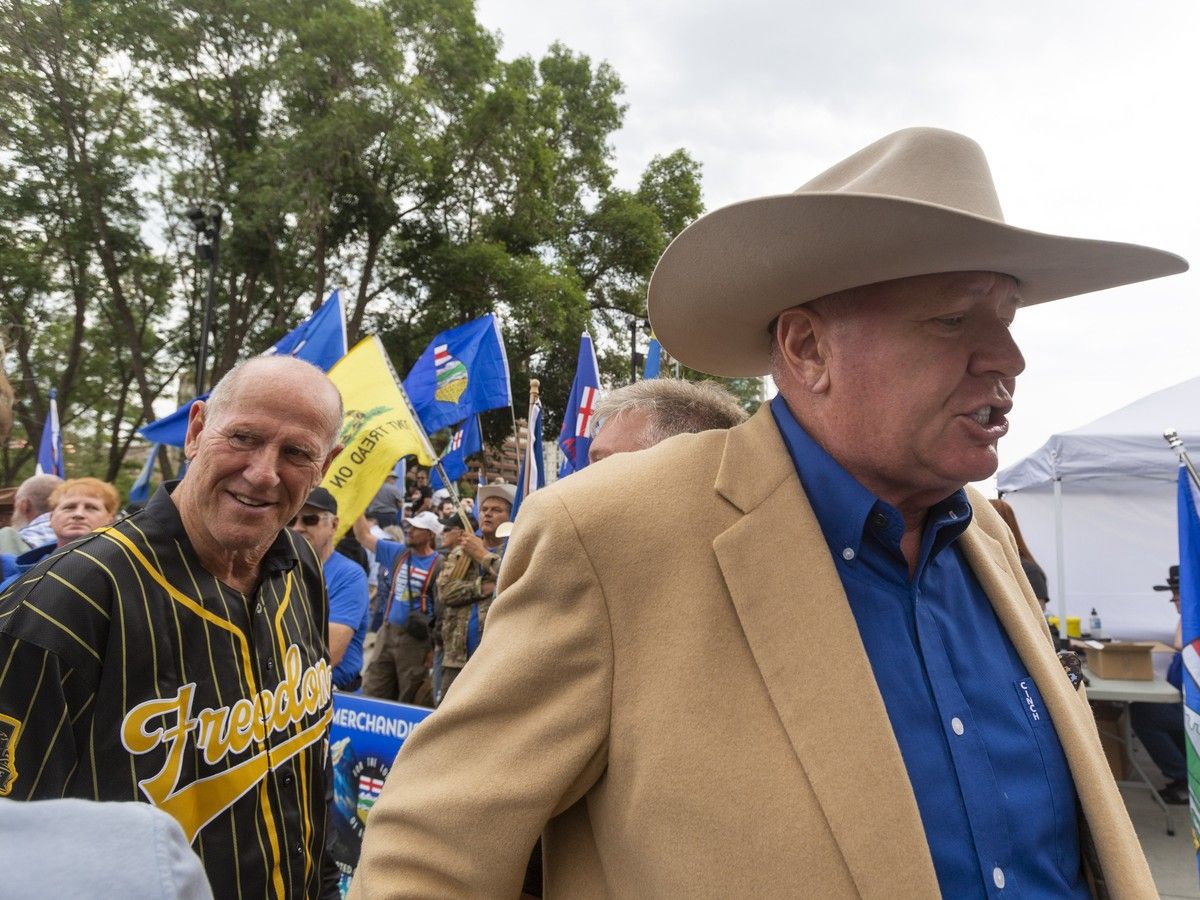
An Alberta judge has denied separatist lawyer Jeffrey Rath’s request to withdraw an additional $350,000 for legal fees and more than $426,000 for living expenses from $3 million frozen during his legal dispute with two former clients. Justice Lorena Harris of the Alberta Court of King’s Bench said Rath’s financial disclosure did not establish that he had no other assets or sources of funding available.
Harris released her decision Thursday in a case involving Tallcree First Nation Chief Rupert Meneen and Rath. The money is held in trust by Rath’s legal counsel while the court determines the fate of the funds. Rath had already been permitted to access $135,000 from the $3 million under a court order, for living costs and legal fees.
“I have no confidence that the Rath applicants’ disclosure is complete, transparent or reliable,” Harris wrote. “I am therefore unable to conclude that the Rath applicants have no other assets or sources of funding available to them.”
Rath is a Foothills-based Indigenous rights lawyer and one of the most visible advocates for Alberta separation. Tallcree retained him in 2015 to pursue a claim against the Government of Canada for unpaid agricultural benefits promised under Treaty 8. Their contingency-fee agreement entitled Rath to 20 per cent of any amount recovered.
The claim was settled in 2017 for $57.5 million. Tallcree’s share was paid into a trust, with Rath named trustee, and Rath received about $11.5 million. The following year, Tallcree sought a review of the fee agreement. An initial review found the agreement reasonable, but a chambers judge later set a fair fee for Rath’s services at $3 million.
Rath appealed, but the Alberta Court of Appeal upheld the chambers judge’s decision. He was ordered to return the remaining $8.5 million to the court, which transferred it back to the Tallcree trust.
In April 2026, Tallcree applied to have Rath removed as trustee and asked the court to order him to disclose the trust’s financial statements. Rath eventually provided statements for 2024 and 2025. According to Tallcree, the documents showed “numerous concerning withdrawals from the trust for administrative costs and professional and other fees,” Harris wrote. The 2024 statements, for example, listed $6 million in administrative and other fees.
Tallcree’s concerns led it to seek a Mareva order, a rare injunction preventing someone from transferring, concealing or selling assets before a case is decided. The court granted the order this summer, removed Rath as trustee and placed the trust in investigative receivership. The order froze $3 million in contingency fees held by his legal counsel, while allowing him access to $135,000 for living expenses and legal fees.
In his latest application, Rath sought another $350,000 for legal fees and more than $426,000 for living expenses. In an affidavit dated Sept. 11, he said the order had frozen “all bank accounts” and “all credit cards,” and blocked routine business expenses, resulting in significant “economic hardship.” He submitted invoices showing that he owed more than $276,000, including costs for caring for his horses and school fees.
Harris said Rath had to meet a legal test to obtain further funds, including showing that he had no other assets that could cover his expenses. That required full financial disclosure, which the judge found was not provided. His materials did not include information about income from his law practice, or details about his stake in racehorses, which he said had earned “$100,000, more or less.”
The receiver in the case found Rath had “not been fully cooperative,” Harris noted. She also said Rath did not disclose an interest in his late wife’s estate, even though he listed a debt allegedly owed to the estate of $10 million. Harris cited the receiver’s finding that, on the day Rath repaid Tallcree’s contingency fees to the court, two cheques totalling more than $11 million were deposited into one of Rath’s accounts from two accounts held in the name of the Sturgeon Lake Cree Nation trust.
Sturgeon Lake is another former Rath client that, like Tallcree, successfully challenged a 20 per cent fee agreement. “The receiver concluded that without the transfer of funds from those accounts, the Rath applicants would not have had sufficient funds to pay the refunded fees into court,” Harris wrote. “This transfer of funds forms the basis in part for (Sturgeon Lake’s) claims against (Rath).” Those claims remain before the court.
Harris said the disclosure issues and certain financial transactions prevented her from concluding that Rath had no other assets available. She clarified that she was not finding he had undisclosed assets. “Rather, I am finding that (his) incomplete and unreliable disclosure prevents (him) from proving that no other assets or funding sources are available.”
The court also found Rath’s invoices for expenses and legal fees too vague, and determined that some expenses were “not ordinary, necessary living expenses.” Harris said Thursday’s decision does not settle ownership of the funds or decide the merits of the First Nations’ misappropriation claims. Rath may file another application for funds if it includes complete financial disclosure, a detailed budget for living expenses and an itemized breakdown of legal costs.
Lawyers for Rath did not respond to a request for comment. The case concerns Tallcree’s claims and the separate claims by Sturgeon Lake, while the court considers the trust funds and the parties’ disputes.
Based on reporting by Edmonton Journal.