
A series of Edmonton restaurant closures this summer has drawn attention to the effects of downtown construction, but restaurant operators say the pressures extend well beyond blocked streets. Rising food, rent, maintenance and service costs are narrowing margins, while many businesses have limited room to raise menu prices. The closures include long-running establishments and newer ventures, with locations across and near the city’s downtown core.
Among the businesses that have closed are Khazana, Zymo, Rhubarb, Greta YEG, PlayWright, Kommune, Bundok, Wilfred’s, KB&CO’s downtown location, The Alley’s Unity Square spot, The Lunchbox Sandwich Shop, Don’ya Ukraine’s Kitchen Downtown, The Moth Cafe and Little Bon Bon Ice Cream. They ranged from fine dining restaurants to takeaway shops, and from recently opened businesses to established names. One feature shared by many was exposure to construction that restricted street access or regularly changed pedestrian routes.
Zymo, on Rice Howard Way, closed less than a year after opening. Menus being made in Ukraine specifically for the restaurant were still on order when it shut, and the business is now advertised for sale as a “turnkey operation.” Khazana had served as a downtown mainstay for three decades. Its owners said a series of city construction projects had cut off access to the restaurant on every side, making it impossible for them to keep operating.
Bundok had been regarded as one of Edmonton’s leading fine-dining experiences for nearly a decade and had received several culinary awards. PlayWright was started by chef Steve Brochu, whose reputation had grown while he worked at Chartier, a well-known French restaurant in Beaumont. Construction contributed to difficulties for businesses, but the conditions of the restaurant industry were already severe, particularly amid high inflation and rents.
The pattern in Edmonton reflects a wider Canadian challenge. A Dalhousie University study at the start of 2026 forecast a net loss of 4,000 restaurants in Canada during the year. In July, Restaurants Canada reported that profitability had declined for 64 per cent of Canadian food-service operators compared with the same period in 2025, and that 41 per cent of restaurants were operating at a loss.
Sylvain Charlebois, director of Dalhousie’s Agri-Food Analytics Lab, has since revised the forecast to a net loss of 2,500 restaurants. The revised figure still points to a difficult year for operators, and Edmonton’s closures are part of that national trend rather than an isolated local wave.
At the same time, restaurant sales have been increasing, particularly in Alberta. The province’s economic dashboard recorded nearly $1.14 billion in restaurant sales in May, the most recent month available in the source data. That total was 5.7 per cent higher than in May 2025 and marked the strongest month of recorded restaurant receipts since the COVID epidemic.
Of the May total, $576 million came from limited-service outlets, including fast-food restaurants. The sales gains at full-service restaurants were not as pronounced as those at businesses such as Tim Hortons or McDonald’s, but the figures still indicated substantial overall sales even after the fast-food share was removed.
Operators say higher receipts have not translated into stronger profits because inflation has raised expenses across the business, from rent and food to maintenance and washroom supplies. Restaurants cannot increase menu prices as quickly as their costs rise, leaving less revenue after expenses. Alcohol, a higher-markup source of sales, has also lost ground as some customers drink less.
Restaurants Canada’s 2025 year-end report said 41 per cent of Canadians had reduced their alcohol intake. Among those who cut back, one-third said they were doing so to protect their finances, while half cited social or lifestyle reasons. Fruit juice was the fastest-growing restaurant drinking choice, with its popularity tripling over one year.
Statistics Canada reported that government revenue from alcohol fell 4.2 per cent in 2024-25, the latest period on record. It was the largest decline since the agency began tracking liquor sales two decades ago, while alcohol sales have been falling steadily since 2020. Wine sales have also declined across Canada for four consecutive years.
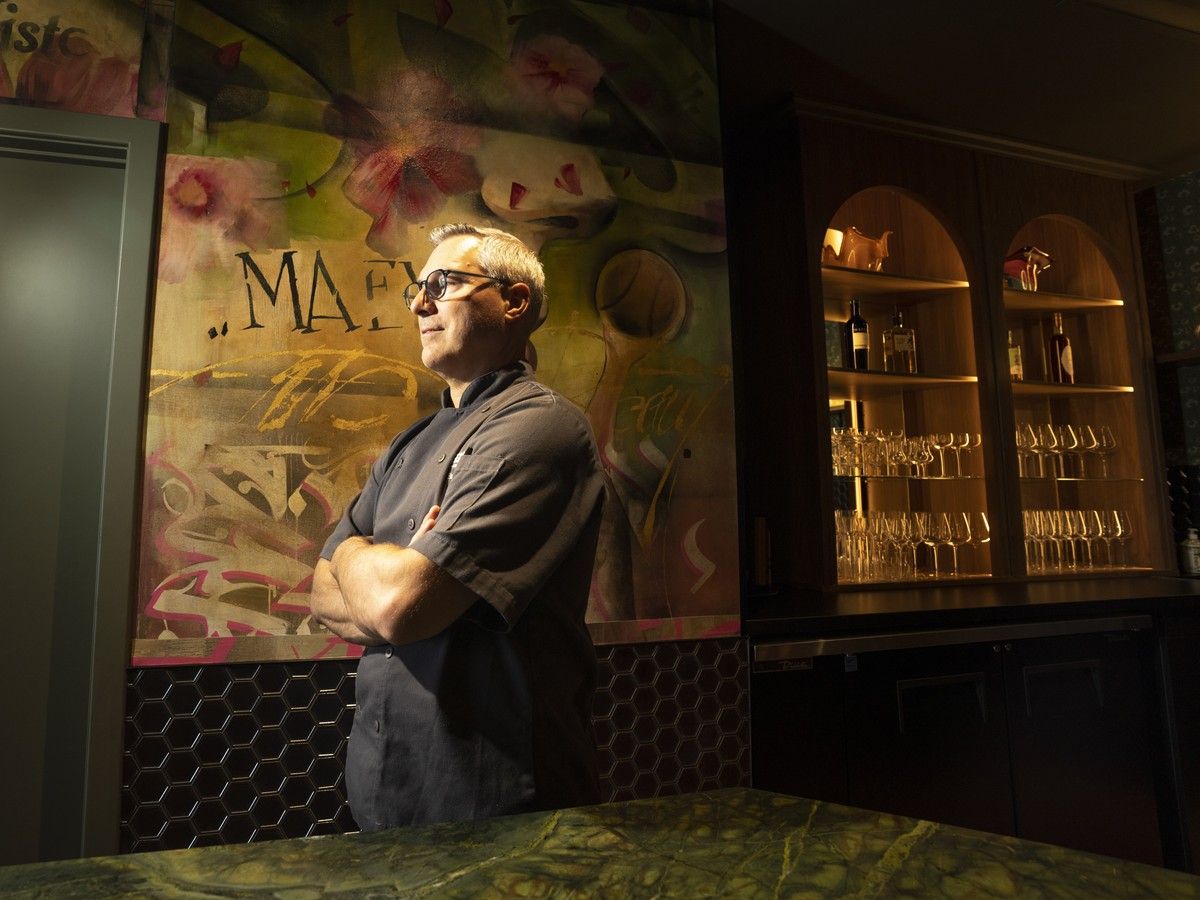
Blair Lebsack, chef and co-owner of RGE RD and its neighbouring Butchery, said profit margins at the businesses have fallen to two per cent from 10 per cent. Despite the pressure, he and business partner Caitlin Fulton are proceeding with plans for a new speakeasy-themed cocktail bar beside their other two locations at 107 Avenue and 123 Street.
Lebsack said operating a restaurant is more difficult now than at any time he can recall, particularly for a business focused on meat and produce from local farms. Buying locally can reduce shipping costs, but larger suppliers such as Sysco can offer restaurants savings through bulk purchasing.
“I think the things that have changed over the past 10 years is how fast prices change for us,” Lebsack said. “We can look at our labour and our rent and stuff like that, and you can build that into the budget because you kind of know what’s happening. But there are things that are changing really quickly, like everyone now has a service charge on their bill. Everyone has a truck charge. Everyone has a gas charge.”
“These things add up, even with our linen company. We sign deals for how much our linen is going to be. But that doesn’t change the fact that they add on a service fee and a truck fee. These fees are always changing, and they can add up to lots,” he said.
Card payment fees are another expense. Restaurants face transaction charges when customers pay by credit card, and operators may absorb them rather than post different menu prices for cash and card payments. Lebsack said the fees become substantial over the course of a year.
“Credit card is the number one way to make transactions, and those transaction fees are massive at the end of the year,” he said. “If I only made what the credit card companies make, I would be a thriving business - that’s how much credit card fees are right now. Well, how do we adjust while still being very hospitable to people?”
The cost of basic services has also changed. Lebsack cited grease traps, which EPCOR requires restaurants to install to prevent grease from causing blockages in pipes. He said the expense for RGE RD, once about $40 a month, is now about $450 per month as cleaning frequency and charges have increased.
EPCOR’s current standard requires grease traps to be cleared once a month or when they reach 25 per cent capacity. Cleaning companies recommend weekly service for larger kitchens, and restaurants must keep records of cleaning and inspections.
Food costs are another pressure, especially for restaurants that buy from local producers instead of national suppliers. Lebsack, who supports whole-animal butchery, said beef prices have risen sharply, while the restaurant’s own prices have not kept pace.
“I have so much beef here, and the price has doubled in the last five years,” he said. “And our prices have not doubled, but our costs have doubled on that. And we don’t see the those prices going down. We also realize there is a ceiling for these sort of things, like, what can people afford?”
Lebsack said he hopes a drop in beef demand as prices rise could eventually lead market forces to reduce the cost of steaks, though the current prices remain a challenge. Ed Donszelmann, proprietor of Otto Food and Drink near 95 Street and 115 Avenue, described similar increases in the ingredients his restaurant uses.
“The cost of everything has gone up so dramatically,” Donszelmann said. “Our canola oil prices have gone up 100 per cent. Our french fries have gone up close to 100 per cent. But we can’t increase our prices by 100 per cent, right? It’s just not realistic in the restaurant business. So, you inch things up where you can. You cut back where you can.”
Canola cost about US$430 a tonne in April 2019. During the COVID pandemic, prices climbed to a peak of US$1,226 a tonne in April 2022. They have since fallen back, but were still about US$800 a tonne at the time described in the source. Coffee futures traded for less than US$1 a pound in 2019 and had reached about US$3.40 a pound.
Otto’s popular Brussels sprouts dish, served with apples, onions and sweet mustard, has been removed from the regular menu because the sprouts became too expensive. When Donszelmann brings the dish back occasionally, it is listed at market price, the way lobster might be priced.
Both operators emphasize close kitchen management as costs rise. Donszelmann focuses on ordering accurately and limiting leftovers. Lebsack describes his approach as “being part of the solution,” keeping top-grade beef on the menu while considering smaller portions, such as a six-ounce steak instead of a much larger cut.
The source article closes by introducing the perspectives of Lebsack and Donszelmann on “restaurant tourists” and the need for careful planning, but its text ends before providing their comments or further detail.
Based on reporting by Edmonton Journal.