
Canadian corporations have yet to make progress on reconciliation with First Nations, Métis and Inuit, and have not begun addressing Call to Action 92, according to Indigenous Watchdog, a non-profit organization that tracks reconciliation in Canada. The finding comes 11 years after the Truth and Reconciliation Commission, led by the late Senator Murray Sinclair, submitted its report, and as Prime Minister Mark Carney seeks Indigenous support for major infrastructure and energy projects amid a deepening trade war with the United States.
Call to Action 92 urges companies to commit to meaningful consultation, build respectful relationships and obtain Indigenous peoples’ free, prior and informed consent before economic development projects proceed. It calls for the United Nations Declaration on the Rights of Indigenous Peoples, or UNDRIP, to serve as a framework for economic reconciliation.
Carney described his approach at a Liberal caucus planning meeting earlier in September. “We are working in full partnership with First nations, with the Metis and the Inuit. As allies from the start, not at the end,” he said. He said Indigenous communities would be more than allies and would also be “owners in the initiatives that will save the country.”
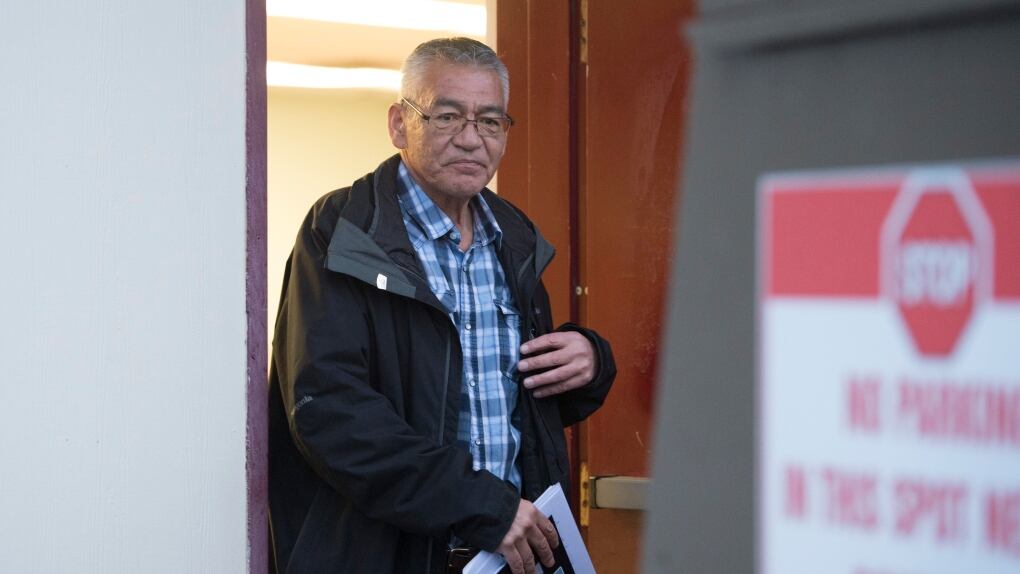
Wet’suwet’en Hereditary Chief Na’Moks rejected that vision. “Look at my forehead. Do you see ‘for sale,’ or ‘for lease’ or ‘for rent’ on it?” he said in an interview with CTV News. He described promises of economic benefits as an attempt to “buy you off,” arguing that construction jobs would last only while pipelines are being built and would disappear afterward.
Na’Moks also said he was angry about the loss of environmental protections. In 2020, Wet’suwet’en hereditary chiefs led protests against the Coastal GasLink pipeline in northern British Columbia. The RCMP intervened to remove protesters who had blockaded railways and ports on unceded territory.
The chief said First Nations abide by L-A-W, which he defined as “the law of land, air and water.” He said: “We don’t want more than what we have. We just want to maintain what is there. Why should somebody else come in (and) destroy it? They leave a mess. They get to go home, but this is our home. We live here. (Carney) does not.”
On Tuesday, when new U.S. import bans on some Canadian goods took effect, Na’Moks accused the federal and British Columbia governments of using tariffs to undo more than two decades of work on UNDRIP. “They’re dismantling that - taking away the human rights, the Indigenous rights and all the environmental protections that we depend on.” He also objected to Carney’s plans to pass Bill C-39, the proposed “Build Canada Strong Act.”
The legislation is intended to speed permits for infrastructure, energy and transportation projects by simplifying approvals and setting a one-year deadline for decisions. Carney has repeatedly summarized the policy as: “One project. One review. One year.” Even some Indigenous leaders who support major projects question whether that schedule is realistic.
Mark Podlasly, chief executive officer of the First Nations Major Projects Coalition (FNMPC), said Indigenous participation in projects has previously taken longer than a year. “Engagement by Indigenous people in projects has taken longer than a year in the past, but this is going to be a challenge for all sides.” The coalition is a national alliance of 205 Indigenous nations, representing about one-third of Canada’s 634 reserves. It is seeking equity ownership in 20 major projects, including pipelines, electric utilities and mining developments.
Podlasly said consultations must be meaningful and begin as soon as possible if Carney’s deadlines are to be met. That requires involving Indigenous communities from the outset and considering their input in project financing and construction. “In the past, Indigenous people have been pushed to the side and have had projects imposed on us. This is a chance to do it right,” he said.
The federal government recently offered 129 First Nations along the Trans Mountain pipeline route a collective 15 per cent ownership stake. The pipeline transports crude oil and refined petroleum from Edmonton to the British Columbia coastline. Podlasly views the proposal as progress in reconciliation, rather than a bribe. “Economic opportunities derived from the lands on which we have founded our nations is not crass. Involvement of Indigenous people into all aspects of Canadian society is the baseline for a just society.”
Consultations on major projects are also likely to include access to basic infrastructure. The Assembly of First Nations estimates that $376.1 billion would be needed over the next 10 years to close disparities. Thirty-six First Nations communities have been without access to safe drinking water for more than a year, while dozens of remote communities lack adequate housing, health care and roads. Wildfires affected 83 reserves this year.
Based on reporting by CTV News Edmonton.