
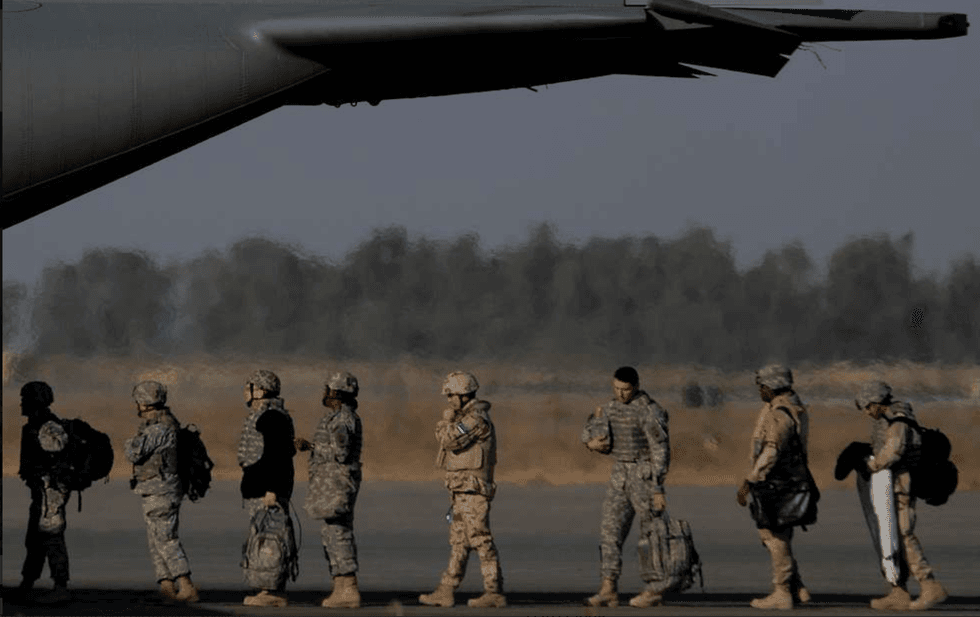
The last American troops are coming home from Iraq, ending a U.S. military presence that continued for nearly all of one former Marine’s adult life. The departure, 19 years after he deployed to Iraq in 2007, has left him questioning what the war achieved and what purpose the losses served. The Iraq War began in 2003 and lasted 23 years, according to the source headline.
The former Marine, who is 48, recalled stepping off a C-17 aircraft at Al Taqaddum Air Base in April 2007, four years after the war began. He survived that deployment and a later deployment to Afghanistan in 2013. Since returning to civilian life, he established a new career and watched his children grow up and leave home, while American troops remained in Iraq for nearly all of that period.
His son is serving in the military today but has never been to Iraq. The veteran said he sympathizes with Iraq veterans whose sons or daughters deployed to the same war zone after them. With military service increasingly a family affair, he said there must be many Thanksgiving conversations in which fathers hear their sons’ Iraq stories before recounting their own experiences, beginning with “back in my day in Iraq…”
He said that, while dodging improvised explosive devices in the summer of 2007, he would have questioned what the United States was doing in Iraq if told he would later write about the final American troops leaving. At the time, he believed U.S. forces were fighting terrorists and helping create a free Iraq. Two decades later, he wrote, “I have no idea why we were really fighting there.”
He said he and his Marines survived close calls. Nearly 5,000 Americans have died during Iraq deployments since the 2003 invasion, he wrote, along with several hundred thousand casualties among U.S. contractors, allied forces and the Iraqi people. He continues to wrestle with whether his own death, had he been killed in Iraq, would have served a purpose, but said he has no good answer.
The fact that the last Americans are returning 19 years after his deployment has reinforced his belief that he may never find one. His grandfather fought in Europe during the Second World War and could say he helped defeat totalitarianism because that war ended while he was still young. By contrast, the former Marine watched people continue deploying to Iraq after he entered middle age.
He said he no longer wants an answer to the question about the purpose of his death. He would like the losses in Iraq, including those killed, the lives broken among those who returned, the resources spent and some of the country’s collective innocence, to become a sacrifice rather than remain a waste. In his view, people and societies make sacrifices when they give up something valuable for a useful purpose. Learning the right lessons from Iraq and applying them in the future, he wrote, is the best way to make those losses meaningful.
One lesson, he argued, concerns the limits of military action. The war began under circumstances he described as, “to be generous, questionable,” and proceeded through different strategies that shared a vague goal: a stable, democratic government in Baghdad. The military removed Saddam Hussein’s government in a month, he wrote, but it took military force supported by all elements of national power more than two decades to get even close to that goal.
Baghdad today has one less dictator, but the city and country remain oppressed in economic, social and political ways, he wrote. Iraq is more pro-Iranian and sectarian, and its factions are largely glad to see U.S. forces leave. He placed Iraq alongside Afghanistan, Libya and Iran as cautionary cases, and said the United States has a poor record of bringing wars to a close despite being good at starting them.
He argued that society can honour those lost in recent conflicts by avoiding the difficult work of ending wars through choosing not to start them. On a Sunday stroll through his Arlington neighbourhood, he visited the Marine Corps War Memorial, where the campaigns involving Marines are listed with their years on the monument’s black granite base. The inscriptions for Afghanistan and Iraq each show a starting year but no end date.
The memorial is surrounded by a chain-link fence as workers refurbish its iconic statue. The former Marine hopes the project will include carving end dates for both wars as a visible sign that they are over. “It is my earnest prayer that it is a long time before another campaign is added,” he wrote.
Based on reporting by Responsible Statecraft.