
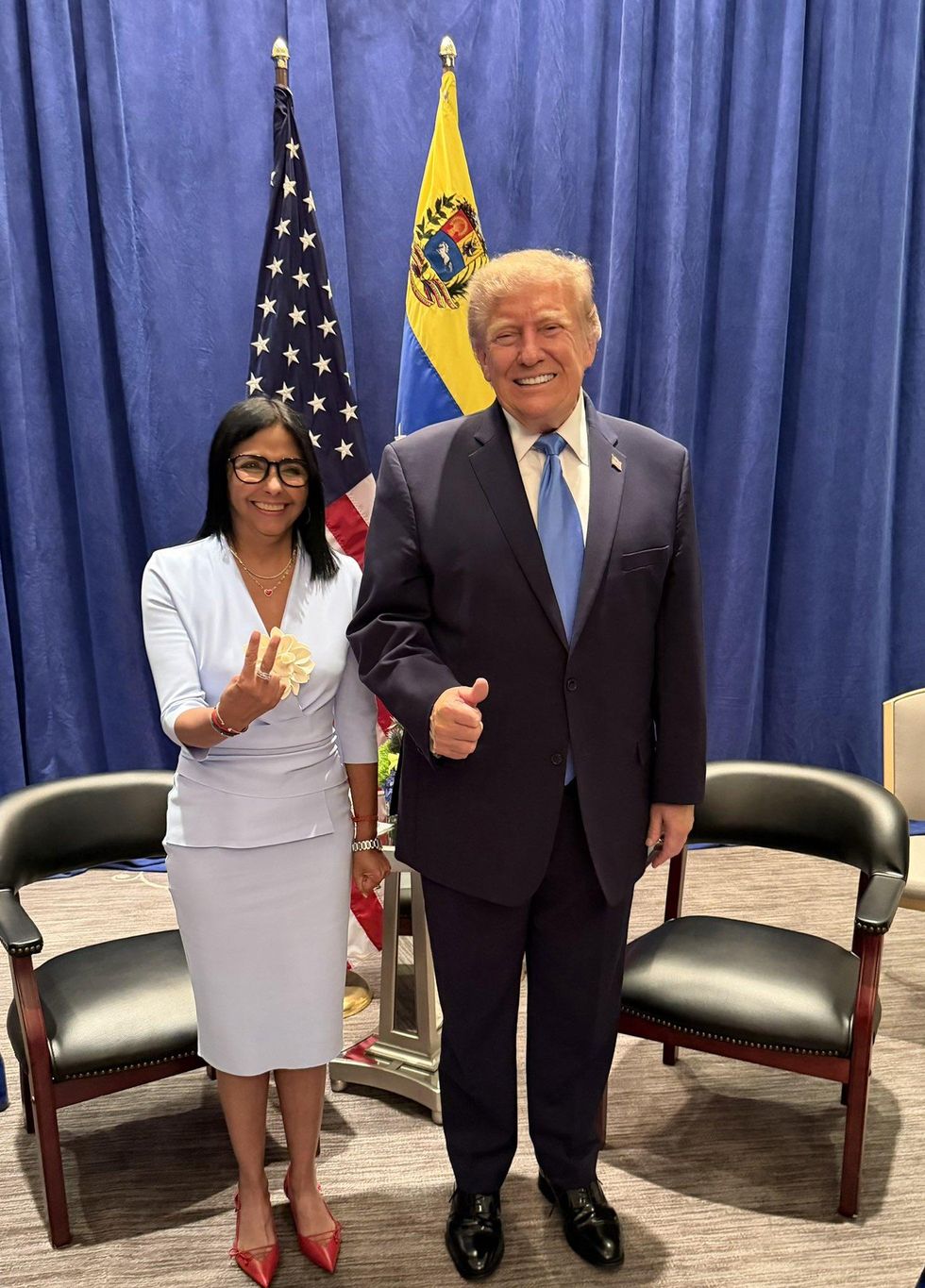
The United States’ intervention in Nicaragua in 1927 helped set in motion a decades-long sequence of insurgencies, dictatorship and revolution, according to an account that warns the consequences of current U.S. policy toward Venezuela may also take years to appear. The comparison centres on the capture of Venezuelan President Nicholas Maduro in January 2026 and a deal under which the United States would gain unprecedented control of Venezuela’s oil resources. The account says nearly eight out of 10 Venezuelans oppose the deal with interim President Delcy Rodriguez, and argues that public anger could fuel future resistance.
The earlier episode began when U.S. Marines intervened in Nicaragua’s civil war between a conservative government and liberal rebels. President Calvin Coolidge ordered the deployment. In 1927, Augusto Cesar Sandino began an insurgency against the U.S. occupation and issued a manifesto that effectively declared war on the United States.
Sandino also denounced liberal leaders who agreed to lay down their arms in response to U.S. intervention. General Moncada, the leading liberal officer who agreed to end his revolt in talks convened by future Secretary of State Henry Stimson, was a particular target. Sandino wrote: “Nobody gave him the authority to abandon the ranks of the revolution to make secret agreements with the enemy.” The account suggests that some Chavistas in Venezuela may hold similar views about Rodriguez.
The U.S. mission to end the civil war drew the Marines into a bitter counter-insurgency campaign against Sandino’s forces. More than 100 Marines were ultimately killed in Nicaragua between 1927 and 1933. That year, the United States withdrew, and the new administration of President Franklin Delano Roosevelt adopted the Good Neighbor Policy, which committed to non-intervention in Latin America’s internal affairs.
Sandino said he held no hard feelings and invited U.S. citizens to visit Nicaragua “as workers, not as bosses.” His fate, however, was not a peaceful end to the conflict. In 1934, one year after the U.S. withdrawal, Nicaraguan forces loyal to General Anastasio Somoza captured and executed him. Somoza had been trained by the occupying U.S. Marines.
Somoza seized power in a military coup in 1936 and ruled until he was assassinated in 1956. His sons then governed Nicaragua brutally until 1979, when a revolutionary group overthrew them. The group adopted the name “the Sandinistas” in reference to Sandino’s rebellion, which had begun nearly 50 years earlier.
The Sandinistas remain in power in Nicaragua under former revolutionary Daniel Ortega, whom the account describes as leading an undemocratic virtual dictatorship. Rep. Maria Elvira Salazar, a Florida Republican, has said the country poses a national security threat because it could provide an airfield from which Chinese bombers could reach the United States. Similar concerns arose in the 1980s, when fears of a communist takeover across Central America helped motivate the United States to commit or support acts of violence in Nicaragua, El Salvador and Guatemala.
Those fears also entered popular culture. In the 1984 film “Red Dawn,” Nicaraguan troops join Soviet forces in an invasion of rural Colorado. The account says many of the alarms about Nicaragua were unfounded or exaggerated, noting that China would have more effective ways to attack the United States than sending bombers from the country.
It argues that any genuine threat from Nicaragua should still be understood in the context of earlier U.S. intervention. In that account’s chain of events, without the 1927 intervention there would have been no Sandino insurgency, Somoza dictatorship, Sandinista movement, Contra war or Ortega dictatorship. It also raises the possibility that there would have been no Central American migrant crisis.
The broader lesson, the account says, is that U.S. political debate tends to assess presidents on two- to four-year election cycles instead of considering grievances that can build across decades. Many Americans who know of the Iran-Contra scandal may not know about the U.S. occupation of Nicaragua in the late 1920s and early 1930s. Some people in American politics and government may know the Sandinistas’ name without knowing about Augusto Cesar Sandino, the rebel whose name they adopted.
The account asks whether Coolidge could have anticipated, when he sent Marines to Nicaragua in 1927, that the intervention would contribute to problems facing Ronald Reagan in 1987. It considers that unlikely. That historical gap provides the context for its warning as the United States heads toward the November 2026 midterm elections.
President Donald Trump’s foreign policy failures are expected to be a major issue in those elections, the account says, with the disastrous war with Iran foremost among them. It says the Trump administration is presenting Maduro’s capture in January 2026 as a success despite questions about transparency. U.S. officials have promoted the oil deal as a direct response to an energy crisis driven by the Iran War that is affecting Americans’ wallets.
Even among critics of the administration’s subsequent Venezuela policy, the account says, a growing consensus holds that the military operation to capture Maduro was at least a tactical success. It describes the Donroe Doctrine as increasing U.S. influence in Latin America and says the non-interventionist approach of Roosevelt’s Good Neighbor Policy is long gone. The Trump administration argues that the results justify its strategy.
Secretary of State Marco Rubio described the shift this way: “For the first time in 15, 20 years, the overwhelming majority of the countries in the Western Hemisphere are now led by pro-American leaders and pro-American governments.” The account cautions that political arrangements produced through gunboat diplomacy and open election interference may not last, and that a lack of immediate consequences does not establish that a policy is wise.
It says new Sandinos and Maduros may be emerging in places unfamiliar to Washington policymakers. With nearly eight in 10 Venezuelans opposed to the Trump-Rodriguez oil deal, it asks whether some will act on that opposition, when a rebellion might come, what form it might take and how the United States could respond in a way that addresses its root causes. It also questions whether Washington will remember those causes when the consequences arrive.
Trump will not have to face those consequences directly, the account says: he has no more elections to run and is unlikely to live to see the full effects of the anger generated across Latin America. It urges Democrats and Republicans to remember that early 20th-century gunboat diplomacy was followed by revolutions, insurgencies and a genuine nuclear crisis in the middle of that century.
In Nicaragua, the account says, nearly 50 years passed before the costs of the 1927-1933 intervention came due, and the United States is still paying them. It closes by asking what the consequences of Trump’s actions will look like in the second half of the 21st century, and says some people alive today will be there to find out.
Based on reporting by Responsible Statecraft.