
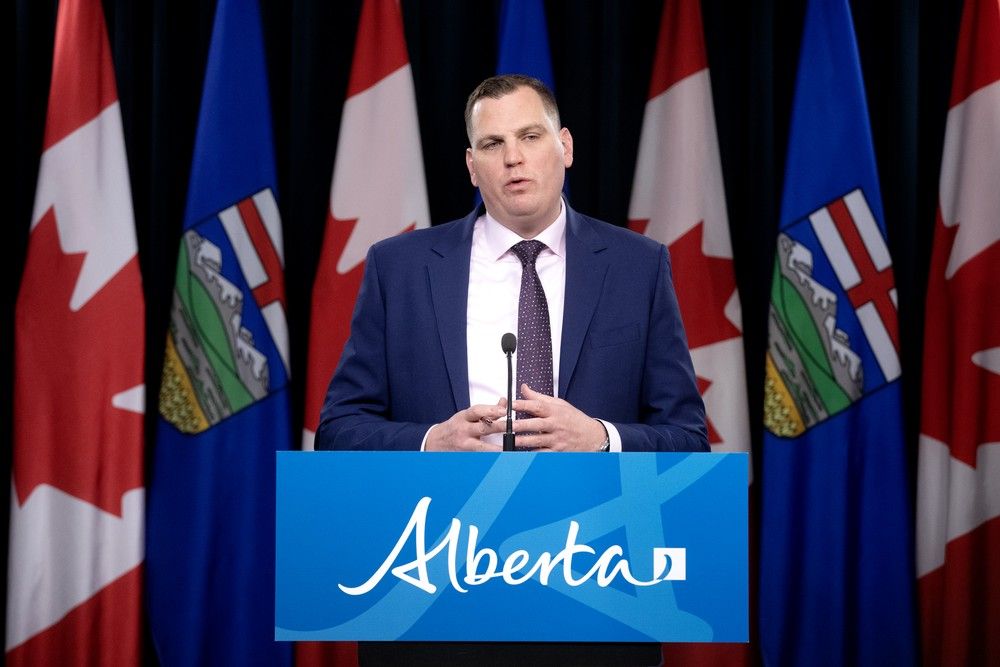
Alberta’s Oct. 19 referendum will ask voters five questions about immigration, and Jobs, Economy, Trade and Immigration Minister Joseph Schow says the measures are intended to give the province more influence over immigration policy, including the number of temporary foreign workers arriving in Alberta. The government also wants some temporary residents to pay part of their education and health-care costs. Schow says the questions do not target permanent residents or new Canadians, and he hopes voters will support all five.
An Ipsos Reid poll released this week found that more than 60 per cent of Albertans plan to vote yes to the five immigration questions, according to the Edmonton Journal. The proposals include seeking more provincial authority over who enters Alberta, reducing immigration numbers, expanding Albertans’ access to new jobs and asking new temporary residents to cover some education and health-care expenses.
Schow rejected criticism that the referendum represents a broad attack on immigration. “That’s categorically false,” he said in a Friday interview with Postmedia. He described the objective as protecting economic stability and ensuring Albertans can find work and access public services.
“I’d say that this is a way to make sure Alberta remains a stable, predictable economy. That there are jobs for Albertans when they need them and looking for them, and that they will get access to health care and education when they need it,” Schow said.
He said Alberta has long been a net producer and argued that its economic position depends on both newcomers who fill current labour shortages and training future workers at post-secondary institutions. “Alberta has been a net producer for as long as I can remember, and that is not by chance. No nation, no province, no business, ever got wealthy or made money by consuming exclusively. We need to maintain our position as a producer, and that means bringing in newcomers who are helping build the economy, fulfilling their labour market vacancies that we need right now, while we simultaneously train the workers of the future in our post-secondary institutions.”
Schow said reductions would focus on temporary foreign workers and students. He cited Alberta’s youth unemployment rate of 15 per cent, above the national average, and said teenagers are struggling to find entry-level work of the kind their parents found in coffee shops and restaurants. He argued temporary workers are filling some of those positions, which he said was not the program’s intended purpose.
“I would say there are industries that we absolutely need temporary foreign workers,” Schow said. “That’s not going to change. Agriculture is a perfect example, but you know we shouldn’t be having temporary foreign workers occupying entry-level positions in things like the service sector - you know, serving at restaurants in downtown Calgary -that was never the intent or the spirit of the program. Since COVID, we’ve become more reliant upon temporary workers, and we need to make sure that we can curb that because we are seeing the numbers manifest.”
The federal government determines how many temporary foreign workers can enter Canada each year. Its stated mandate is to reduce the number of foreign workers and students admitted: 385,000 are to be welcomed this year, with the total set to fall to 370,000 in each of 2027 and 2028.
Schow said temporary foreign workers made 30,000 emergency-room visits in Alberta last year. The figure echoed a claim Premier Danielle Smith made earlier in the week. Schow said a yes vote would give the provincial government a mandate to pursue changes, after which it would assess options in light of costs, housing and education.
“The first step is to get a mandate, and that’s what the referendum is for. Once that is done, then we’ll evaluate the best path forward that’s sustainable for us from a financial perspective, housing perspective, and education perspective, and that is the plan. Other jurisdictions have things like healthcare premiums before you enter the country as a temporary worker.”
He also said some temporary workers receive renewal after renewal, a situation he described as “akin to permanent residency, without the surety of permanent residency.” The referendum questions do not themselves set out the path the province would take after a yes vote; Schow said the government would evaluate sustainable options once it had a mandate.
Bronwyn Bragg, an assistant professor at the University of Lethbridge who wrote a Parkland Institute report on the immigration questions, disputed that the questions would improve the situation. “Ultimately, these questions do nothing to address immigration policy or the challenges facing Alberta today. They are there to foster anger and promote scapegoating,” Bragg wrote.
The five questions put immigration policy and related costs before Alberta voters on Oct. 19. Schow’s stated case is that the province should reduce reliance on temporary workers in some jobs while continuing to bring in newcomers who meet labour needs, and that temporary residents should contribute toward some services. Bragg argues a yes vote would not change the system or resolve the challenges facing Alberta.
Based on reporting by Edmonton Journal.