
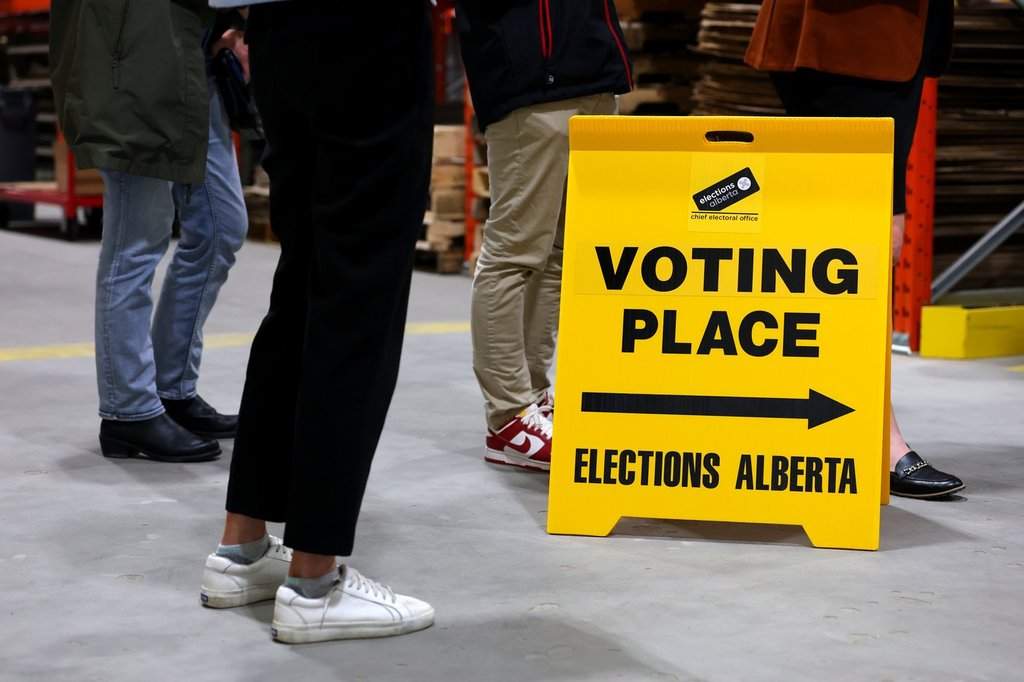
Albertans will vote Oct. 19 on a series of questions about the province’s future and its place in Confederation, including whether to remain in Canada or begin proceedings for a second, binding referendum on leaving. An Ipsos poll found 20 per cent say they intend to vote “yes” to holding that second referendum, a result statistically unchanged from June. That level is not enough to trigger a second vote, but turnout could affect how the result is interpreted.
The poll found that 81 per cent of respondents planned to vote in the referendum. Ipsos Senior Vice President, Public Affairs (Canada), Gregory Jack, said turnout may differ between supporters and opponents of change. Historically, people seeking change are often more motivated to vote than those who favour the status quo, though referendum campaigns can also mobilize voters against change.
Jack said supporters of a second vote, the “yes” side, may be more likely to cast ballots than the “no” side, some of whose members may prefer not to answer the question. The poll does not establish how people who say they will not vote would choose, because those respondents are not asked how they would vote.
Survey answers capture respondents’ stated intentions at a particular time, Jack said, and people do not always follow through when they reach the ballot booth or turn out at all. He pointed to Ontario’s 2022 provincial election, when some commentators expected a more competitive contest. Doug Ford’s Progressive Conservatives instead expanded their majority, winning 83 seats, as turnout fell to a record-low 44 per cent.
Turnout in Alberta could be higher given the stakes, Jack wrote, but that is not certain. He illustrated the effect of different participation rates by assuming that 80 per cent of the 20 per cent who say they will vote “yes” turn out, compared with 60 per cent of the 70 per cent who say they will vote “no.” Under that example, “yes” ballots would account for 28 per cent of votes cast, rather than the 20 per cent suggested by the poll.
That 28 per cent would not mean that 28 per cent of all Albertans supported the proposition. It would mean that 28 per cent of those who voted marked “yes.” Such a result would still fall short of the 50 per cent plus one needed to trigger a second question on separation, but Jack said support from more than a quarter of voters could not be ignored and would need consideration in future government policy discussions.
Jack raised the question of how small the “yes” vote would need to be for the issue to be put to rest. He said that in a high-turnout scenario, a result below 20 per cent would make a compelling case that most Albertans did not want to pursue the matter further. A low turnout, particularly if “no” voters were less likely to participate, could produce a share of “yes” ballots that overstates support across the wider population.
The “yes” side has already said that, for them, “no ballot outcome will put the matter to rest.” Its members intend to continue the conversation regardless of the Oct. 19 result. Jack said that does not make a result less legitimate: the outcome is the one recorded when ballots are counted, even if turnout affects what it says about the province as a whole.
Ipsos polling also found that supporters of the “yes” side tend to be older. Older voters are generally more likely to vote, according to Elections Canada turnout studies, a pattern that could further help the “yes” side mobilize its supporters. The poll does not show how many people in either camp who intend to vote will actually do so.
The referendum contains nine other questions on immigration and constitutional change, among other issues. Ipsos polling showed broad support among Albertans for most of those measures. Some or most could receive majority support, while several involve multiple jurisdictions and would require the participation of other provinces and the federal government, making unilateral action by Alberta difficult.
Jack said strong turnout from both sides would offer the best basis for a result reflecting the views of most Albertans. Current polling suggests that most Albertans want to remain in Canada, but participation rates on both sides and the intensity of their views will shape what the Oct. 19 result indicates about the province’s future.
Based on reporting by Global News Edmonton.