
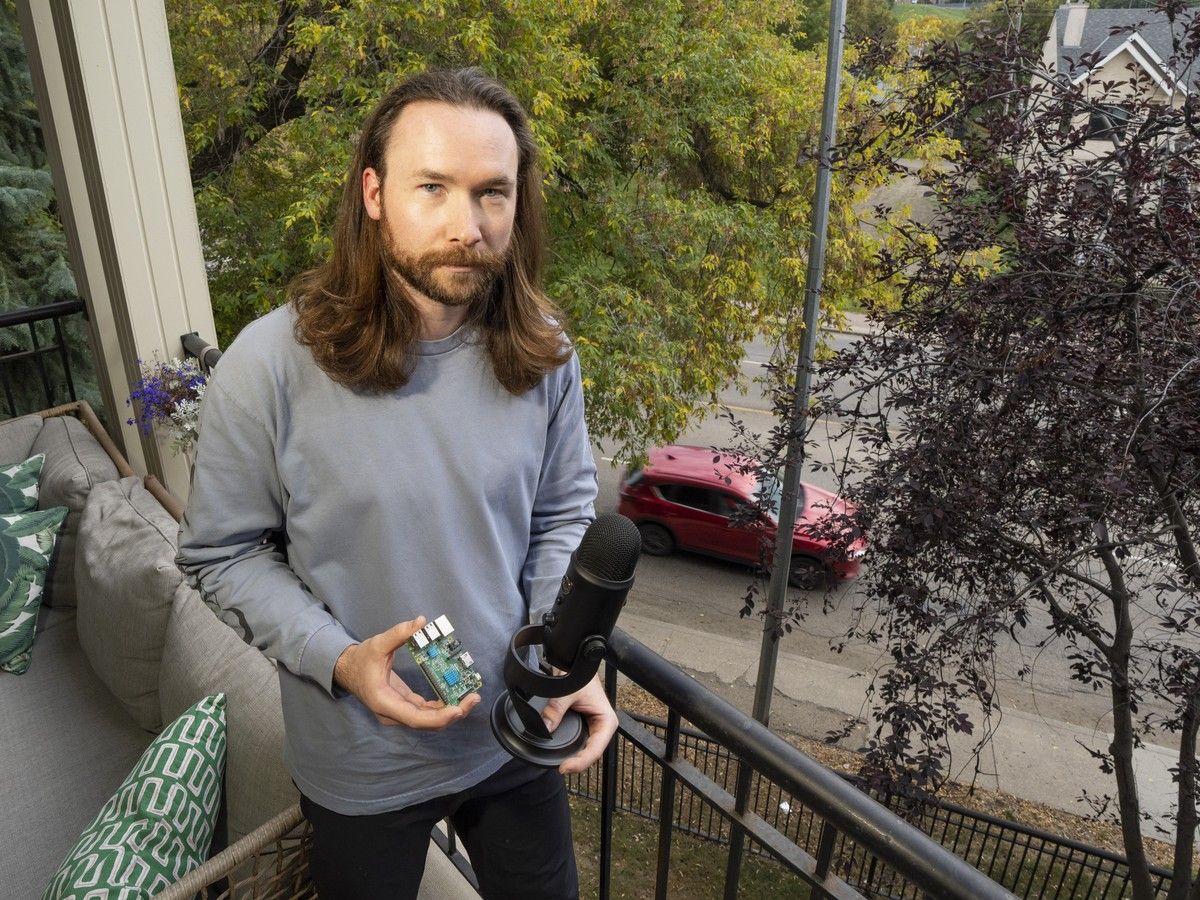
Seth Dear, an operating-room registered nurse at the University of Alberta hospital, is recording late-night vehicle noise in Edmonton with homemade decibel monitors, hoping to give enforcement officers information about when and where to watch for offenders. Dear says the noise has been disrupting his sleep, and he is collecting measurements to establish how often it happens and whether it breaches city limits.
Dear began the citizen science project after experiencing noisy vehicles passing his home late at night. Working in an operating room, he said, makes rest important. He set up a monitor on his balcony in Cloverdale using a Raspberry Pi and a leftover microphone, then created an online portal to show the results with help from a large language model.
“Randomly throughout the week you get the 2 a.m. people backfiring their truck,” Dear said. “It’s frustrating when you’ve got to get up an hour or two from then and your sleep is interrupted. So I thought why not record this and see how much it is happening and if it’s actually a real problem? Put some numbers to our collective annoyance with the noise pollution.”
He said the early data indicates that more than 30 per cent of noise violations are taking place after 10 p.m. Dear has not set an end date for the study and wants to find out whether drag racing slows during the winter. He plans to present the findings to city council and the Edmonton Police Commission.
The effort has expanded since he installed his first monitor. Dear now has three devices, including monitors tracking sound levels around Whyte Avenue and the Brewery District. Five other people have asked for monitors, and Dear said he can assemble additional units for about $175 in parts. People interested in taking part can contact him through the monitoring website.
Ward papastew Coun. Michael Janz, who has long criticized noise pollution, welcomed the project and residents’ involvement in tracking street noise. “It’s super cool that one neighbour, using guides and online tools, is putting data and facts to a longstanding complaint,” he said. “It’s like neighbourhood watch for noise.”
Janz said the issue extends beyond disturbance. “It’s not just the noise - it’s the fact this is street racing. It’s not just a nuisance, it’s a safety hazard.”
Edmonton’s noise rules set a 50-decibel limit in residential areas from 10 p.m. to 7 a.m. Most daytime noise is limited to 65 decibels from 7 a.m. to 10 p.m. Construction must stop by 9 p.m. on weekdays and 7 p.m. on weekends. Concerts and festivals can run later if they receive a permit, at the discretion of the city manager.
There are also time limits for louder sounds: noise above 70 decibels may be projected for no more than two hours in a day; above 75 decibels, one hour; at 80 decibels, half an hour; and at 85 decibels or higher, 15 minutes. Snow and ice removal from roads is the sole exception allowed at any hour.
City 311 open data shows 1,143 registered noise complaints so far in 2026. The city recorded 1,576 in 2025, 1,022 in 2024 and 1,063 in 2023.
The city is also pursuing technology to address noisy vehicles. Its $50,000 pilot project is intended to explore tools police could use to pinpoint loud vehicles and enforce bylaws. The city issued a request for information last year, but received no responses and has reissued it. A report on available technology is expected before council after the second request closes Nov. 1.
The city has also considered a new noisy-vehicle buffer, while a councillor’s motion has targeted noisy vehicles in Edmonton. Dear’s monitors add locally collected measurements to that discussion, with the study continuing as he watches for changes in activity through the colder months.
Based on reporting by Edmonton Journal.