
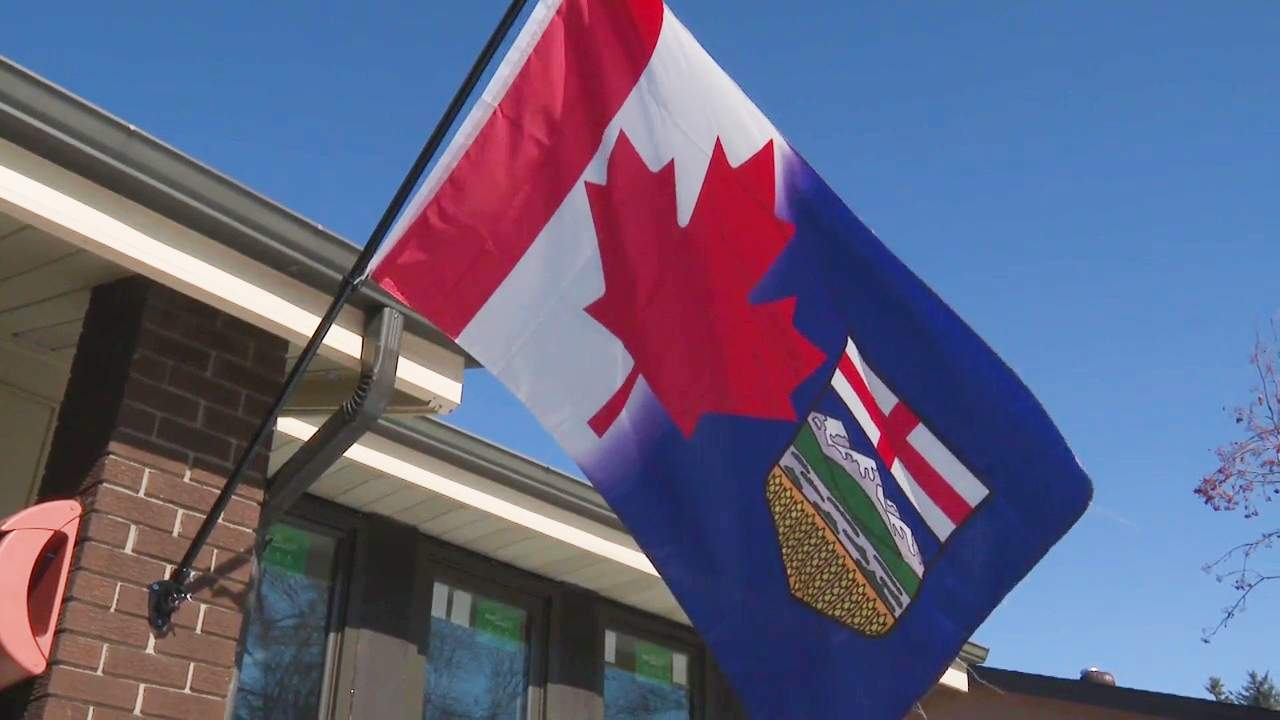
Seven in 10 Albertans say they plan to vote for the province to remain in Canada in the Oct. 19 referendum, according to an Ipsos poll conducted for Global News. The survey found 20 per cent would vote for Alberta to begin the process of holding a binding referendum on independence. Support for staying has slipped by two percentage points since a similar poll conducted from May 28 to June 1, a change Ipsos described as statistically insignificant.
The referendum, announced by the Alberta government on Feb. 19, will include 10 government-initiated questions, most dealing with immigration and constitutional reform. It initially had nine questions. On May 21, Premier Danielle Smith announced a 10th question on Alberta separatism, asking voters whether they want to remain in Canada or proceed to a second, binding referendum on leaving Confederation.
Ipsos interviewed 1,500 Canadian adults online between Sept. 18 and 22, including 600 Alberta residents. The poll found 76 per cent of Albertans knew the referendum would include several questions, and 62 per cent said they planned to vote on all 10. Public and political attention has largely centred on the final question about staying in Canada or pursuing a binding independence referendum.
Support for starting that process was higher among men, at 25 per cent, and Gen Z respondents born between 1997 and 2012, at 28 per cent. Albertans living outside Calgary and Edmonton were also more likely to back it, at 28 per cent. Ipsos Public Affairs senior vice-president Gregory Jack said the demographic pattern was expected.
“It’s not really surprising that rural Albertans, older Albertans and male Albertans are more likely to say that they want to go,” Jack said. “Younger Albertans, more urban Albertans in Calgary or in Edmonton are more likely to say that they’re going to want to stay. The numbers on who wants to go or who wants to stay haven’t really changed throughout the campaign.”
Turnout could influence the referendum result, Jack said, because supporters of the process question may be more motivated to vote than those who favour staying in Canada. “I think in this particular referendum, it’s going to be more important than usual because the ‘no’ side - the side that wants to stay - is not as motivated as the ‘yes’ side is,” he said.
“The ‘yes’ side are the ones that want to ask the question, they’re the ones who want to be having this conversation. So if they have a high voter turnout and the ‘no’ side stays home or doesn’t vote, you might see a higher level of ‘yes’ than you would see if the entire population had voted,” Jack said.
The poll also tested a hypothetical scenario in which a binding independence referendum takes place. In that case, 74 per cent of respondents said they would vote to stay in Canada, up from 72 per cent when Ipsos asked the same question in June. Nine in 10 of those who said they would stay said they were definite in their choice.
Support for staying in that hypothetical vote was highest among Boomers and university graduates, both at 80 per cent. Women were at 79 per cent, Edmonton residents at 79 per cent, and Millennials, born roughly between 1981 and 1996, at 75 per cent.
Fourteen per cent of the 600 Albertans surveyed said they would vote to leave Canada in a binding referendum, down from 18 per cent in June. Among that group, 69 per cent said they felt strongly about their position. The strongest support for leaving was reported among men, at 20 per cent, and Gen Z and Gen X respondents, each at 18 per cent. Gen X refers to people born roughly between 1965 and 1980.
Albertans outside the major city centres were more likely to be undecided about the hypothetical vote, at 12 per cent, compared with seven per cent across the province. Jack said a January Ipsos poll had found about three in 10 residents supported independence, but a closer examination suggested only half of those interested in separatism were committed to following through when faced with the costs and consequences.
The current polling suggests separatist support may not be sufficient to carry the issue beyond the initial October referendum, but Ipsos asked about intentions if a binding vote were still held. Jack said the two campaigns could frame the October ballot differently. “For the ‘yes’ side, they’re going to want to suggest that this is not a final referendum - there’s going to be another referendum, and it’s an opportunity to send a message to Ottawa,” he said. “For the ‘no’ side, they’re gonna suggest that this the time to put this issue to rest.”
Jack said many Albertans appear to have settled on a position months ago. “We should see perhaps some more movement in the next couple of weeks as the referendum gets closer, but a lot of people have a position on this,” he said. “I think both campaigns are going to want to get their supporters out as much as possible, because people have made up their minds, to a large extent, on issues like this.”
The overall poll of 1,500 Canadians has a stated accuracy of plus or minus 3.1 percentage points, 19 times out of 20, had all adult Canadian residents been polled. Questions asked only of Albertans, with a sample of 600, have a credibility interval of plus or minus 4.9 percentage points; those asked of 900 Canadians outside Alberta have an interval of plus or minus 4.0 points. Ipsos said intervals are wider among population subsets and that all sample surveys and polls may have other sources of error, including coverage and measurement error.
Based on reporting by Global News Edmonton.