
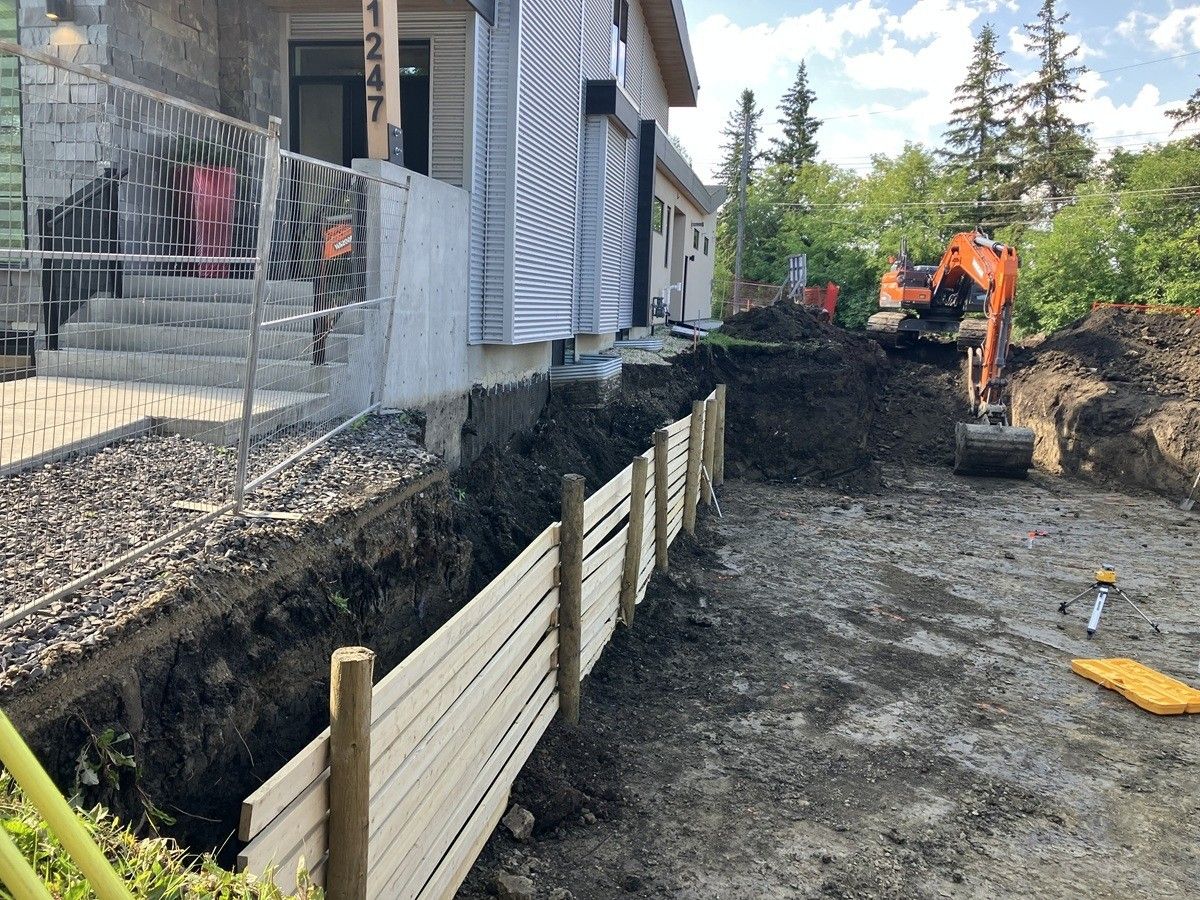
Alberta Occupational Health and Safety carried out 433 proactive inspections at residential construction sites in Edmonton over the past two years, with fall protection, excavation safety and hazardous materials such as asbestos among the leading issues requiring enforcement. The findings come as observers continue to report workers exposed to falls and excavation hazards during a period of accelerated infill construction in the city.
OHS told Postmedia that it does not track inspection data specifically for infill, but residential construction is one of its main areas of focus. The agency said municipalities issue permits and may set additional requirements for fencing, containment of construction sites and asbestos abatement through their permitting processes.
The inspections follow reports of workers positioned more than three metres above ground without fall protection, as well as workers near the walls of excavations deeper than 1.5 metres without shoring or sloped sides. Earlier this month, Postmedia reported that a builder working on an infill property had been ordered to stop work over asbestos-related issues.
The continuing concerns echo the death of Brian Frederick Tomyn, who was killed 10 years ago while working on a Westmount infill project. He was inside a four-metre-deep trench digging a sewer line when its wall collapsed. It took crews five hours to find his body and another four hours to free him.
Tomyn was found upright and still holding a piece of pipe. He died of traumatic asphyxia after the sudden crushing weight of the debris trapped him. The trench had neither sloped sides, known as a cut back, nor shoring to support its walls. A single piece of lattice served as a way in and out.
A subcontractor had used a backhoe to dig the trench and sent Tomyn into it despite having no previous training in excavation or construction. A director of the development company behind the project later pleaded guilty to failing to follow safety regulations. The company was ordered to pay more than $100,000 in fines; the subcontractor was fined $425,000 and sentenced to four months in jail.
The tragedy shares a date with the National Day of Mourning for workers killed or injured on the job. It remains a reminder of the consequences of ignoring safety rules, which continue to be breached despite two years of faster-paced infill building in Edmonton in 2026.
University of Alberta engineering professor Renato Macciotta said construction-site cave-ins recur every few years even though the industry has clear rules intended to prevent them. “We have processes in place to prevent these exact types of occurrences,” Macciotta said.
Alberta’s Occupational Health and Safety Code sets out protections for excavation work. If workers are operating near the wall of an excavation deeper than 1.5 metres, the sides must be sloped back or supported with shoring. For excavations deeper than three metres, provincial rules require a temporary protective structure certified by a professional engineer.
The risk of collapse depends on several conditions, Macciotta said, including the excavation’s depth and width, the material in the ground, rainfall and how long the hole remains open. The range of factors is why engineered solutions such as shoring are needed for digs deeper than three metres, he said.
Excavation failures also pose risks beyond the safety of workers in the hole. Macciotta said a collapse, or even a change in the shape of an excavation, can shift nearby structures. Roads may crack, and nearby basements and foundations can be damaged. “That’s where the big costs can occur if you don’t have proper shoring,” he said.
Postmedia shared a photograph of a recent infill site where workers were in an excavation with no shoring. Macciotta said the hole appeared likely to be more than 1.5 metres deep, but the arrangement could comply with the rules if workers were kept far enough from its walls. A worker was visible close to the trench wall, however.
Macciotta also pointed to erosion along the wall and a buildup of organic material, which is not usually strong. “If I were the owner of the house next door, I’d be very worried about cracking in my basement,” he said.
The safety concerns have also unfolded alongside neighbourhood disputes over infill construction. Related reports have described a Parkview house fire investigators called “suspicious,” as the community grappled with infill concerns, and a work stoppage ordered for a Parkview infill developer after a Monday house fire. The Edmonton Journal report included files from Postmedia and was written by Liam Newbigging, whose contact details listed lnewbigging@postmedia.com, @liamnewbigging.bsky.social and x.com/nubigin.
Based on reporting by Edmonton Journal.