
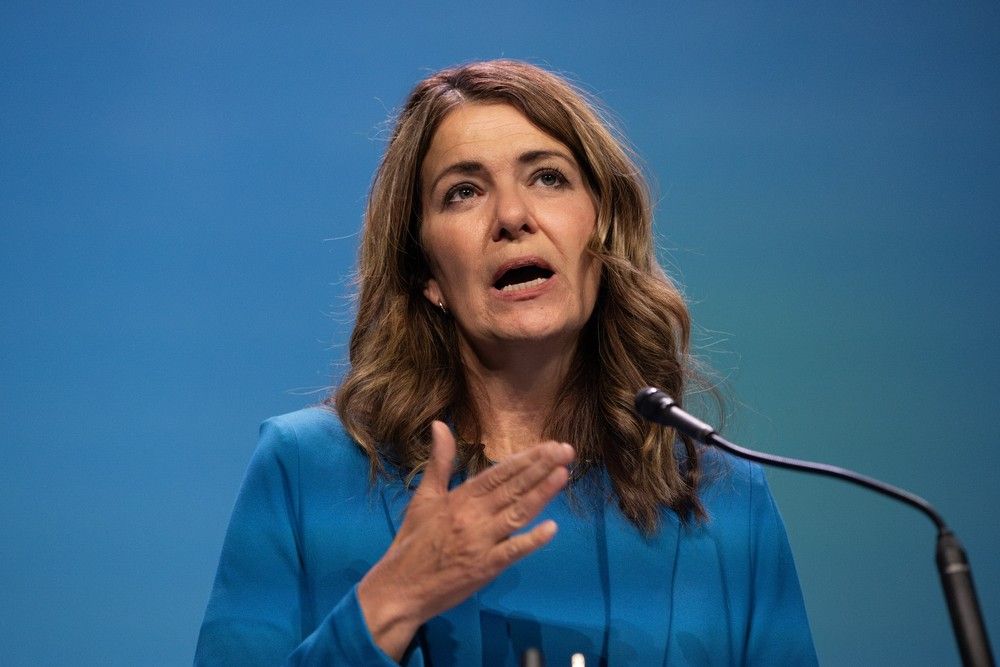
Premier Danielle Smith said Alberta is considering changes to the Municipal Government Act as municipalities press the province for infrastructure funding and seek a better working relationship. Speaking Wednesday at the Alberta Municipalities Convention in Edmonton, she addressed concerns about funding, council conduct rules and relations between the two levels of government. One possible change would allow larger municipalities to hold private briefing meetings before debating issues in public, in a manner similar to provincial government practice.
“Maybe the way to talk about the Municipal Government Act is that’s kind of like our constitution with each other,” Smith said. “I have heard from many of you that when you feel frustrated it is (that) the MGA won’t let us do this or that.” The act sets out rules governing municipalities and their relationship with the province.
Alberta Municipalities president Dylan Bressey said local governments object to rules imposed on all councils in response to actions by one or two councils that do not represent the broader group. He pointed to changes to the code of conduct, and his remarks drew loud applause from the convention audience. Smith replied that some rules may not suit municipalities of every size.
“Maybe there’s just some thinking we need to do in the MGA about how we help different municipalities as they’re growing into those different authorities and maybe there’s kind of an approach that we can take there,” Smith said. She indicated her government may consider changes to the legislation. Bressey later told reporters that the act has been amended several times over the past few years, and that municipalities are now focused on stability rather than further amendments.
Smith also addressed the coming Oct. 19 referendum, urging convention members to choose option one on the separation question, which would keep Alberta in Canada. She said Ottawa is finally listening to the province’s grievances. Bressey said the referendum has highlighted a sense among many Albertans that they are not being heard, along with concern about their economic future.
“We think that the angst we’re hearing right now is a real case to strengthen municipal governance and to make sure that we’re properly funding local infrastructure,” Bressey said. He linked those concerns to the need for stronger municipal governance and adequate local infrastructure investment.
The funding debate follows the province’s announcement over the summer that it was back in the black, with a $2-billion surplus attributed to high oil prices. Bressey wants an allocation-based funding formula and has asked Alberta to direct 10 per cent of that surplus, about $200 million, to municipal infrastructure. He said provincial infrastructure funding for municipalities has fallen by 50 per cent over 10 years, failing to keep pace with population growth and ageing infrastructure.
Asked about municipalities’ role in reconsidering Alberta’s fiscal future, Smith said Albertans remain averse to taxes and no one would want the province to introduce a sales tax. She said the province could provide more certainty about its approach to education property taxes and is examining that area more closely. Bressey agreed that Albertans do not want taxes to rise, while maintaining that municipalities face a funding gap as infrastructure ages and communities grow.
The convention discussion covered both the structure of municipal governance and the resources available to local governments. Smith’s comments left open the possibility of tailoring some Municipal Government Act rules to municipalities as they grow and take on different authorities. Bressey’s remarks emphasized that municipalities want stability in the legislation and a funding approach that addresses infrastructure needs.
Based on reporting by Edmonton Journal.