
Responsible Statecraft has reported:
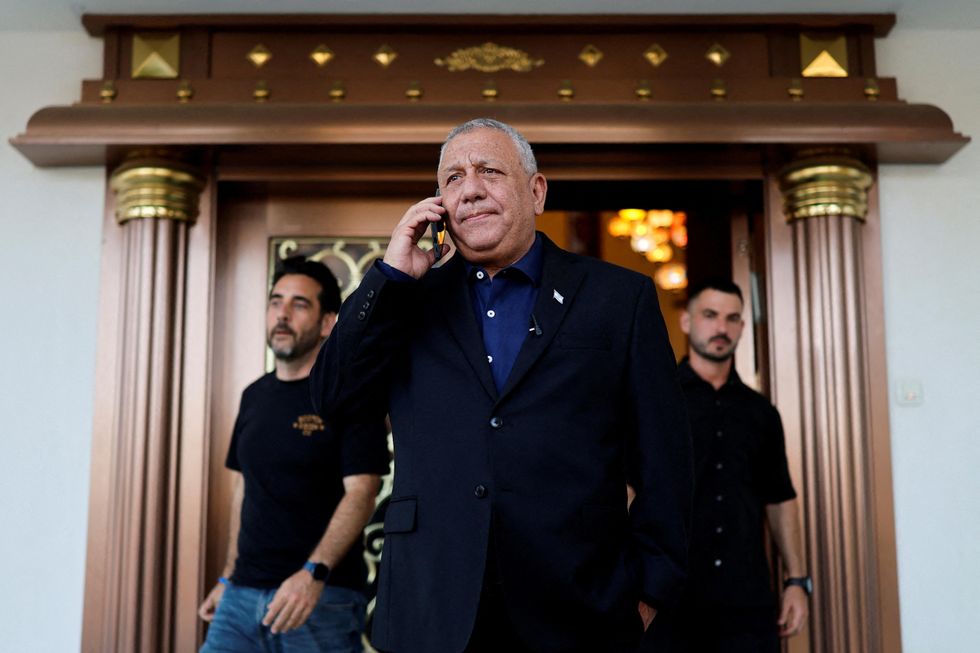
Gadi Eisenkot pledged Thursday to destroy Hamas’s military wing within 18 months of taking office, making the promise as he seeks to unseat Israeli Prime Minister Benjamin Netanyahu in elections later this month. Eisenkot, a former chief of Israel’s general military staff, said Hamas could be defeated through “President [Donald] Trump’s framework” for disarming the group or “through the use of military and operational capabilities.”
Netanyahu’s Likud party responded by saying Eisenkot would need Arab parties’ support to form a coalition government. “How would you destroy Hamas without getting permission from your partners, Mansour [Abbas] and [Ahmed] Tibi?” the party said, referring to two leading Arab politicians in Israel.
Israelis are scheduled to vote on October 27. Eisenkot and Netanyahu each lead parties expected to win just over 20 seats in the 120-seat Knesset, but it remains unclear whether either can assemble a majority coalition. Arab parties are expected to win 13 seats, as of the time of the source’s report, while both leading candidates have expressed scepticism about working with them.
Recent remarks by the candidates reflect a sharp shift in Israeli politics towards the pro-war right in recent years. Both have also sought political advantage by accusing the other of supporting a Palestinian state, even as American politicians continue to back a two-state solution.
In a recent post on X, Eisenkot called Netanyahu “Benjamin is Palestine,” criticising the prime minister for speaking “in favor of two states dozens of times” and for failing to destroy Hamas and Iran. Netanyahu, meanwhile, has said Eisenkot would “establish a Palestinian state before GTA 6 comes out,” referring to a popular video game scheduled to launch next month.
The candidates also share a position on Iran. “Israel must do everything, including attacking Iran, to destroy its nuclear capability,” Eisenkot said this week. Their disagreements are largely on domestic matters, including corruption and whether conscription should be expanded to include the ultra-Orthodox community, which has long been an important source of support for Likud.
The candidates’ broad agreement on foreign policy reflects what Israeli Maj. Gen. (res.) Tamir Hayman recently described as Israel’s “‘new’ national security concept.” Israel has not formally announced a change in its strategic outlook, but Hayman said its actions since October 7 indicate a different approach, including rejecting the prospect of permanent peace with Arab states.
“War is necessary, and preventive war is preferable because it secures a significant achievement at the outset,” Hayman wrote, summarising views held by many colleagues in Israel’s national security sector. He also identified greater emphasis on Israel’s Jewish character than on its democracy, increased doubt about the U.S.-Israel relationship, and the treatment of settlements and civilians as “part of the defense network.” Hayman is executive director of Israel’s leading think tank.
These political and strategic changes could complicate efforts by either candidate to build a government. In 2021, Naftali Bennett and Yair Lapid formed a coalition that made history by including Mansour Abbas’ Raam party, the first Arab party to join an Israeli government. After three years of bitter war, the source said there is little reason to expect a similar bloc to form again, leaving open the possibility that neither side will secure a majority coalition.