
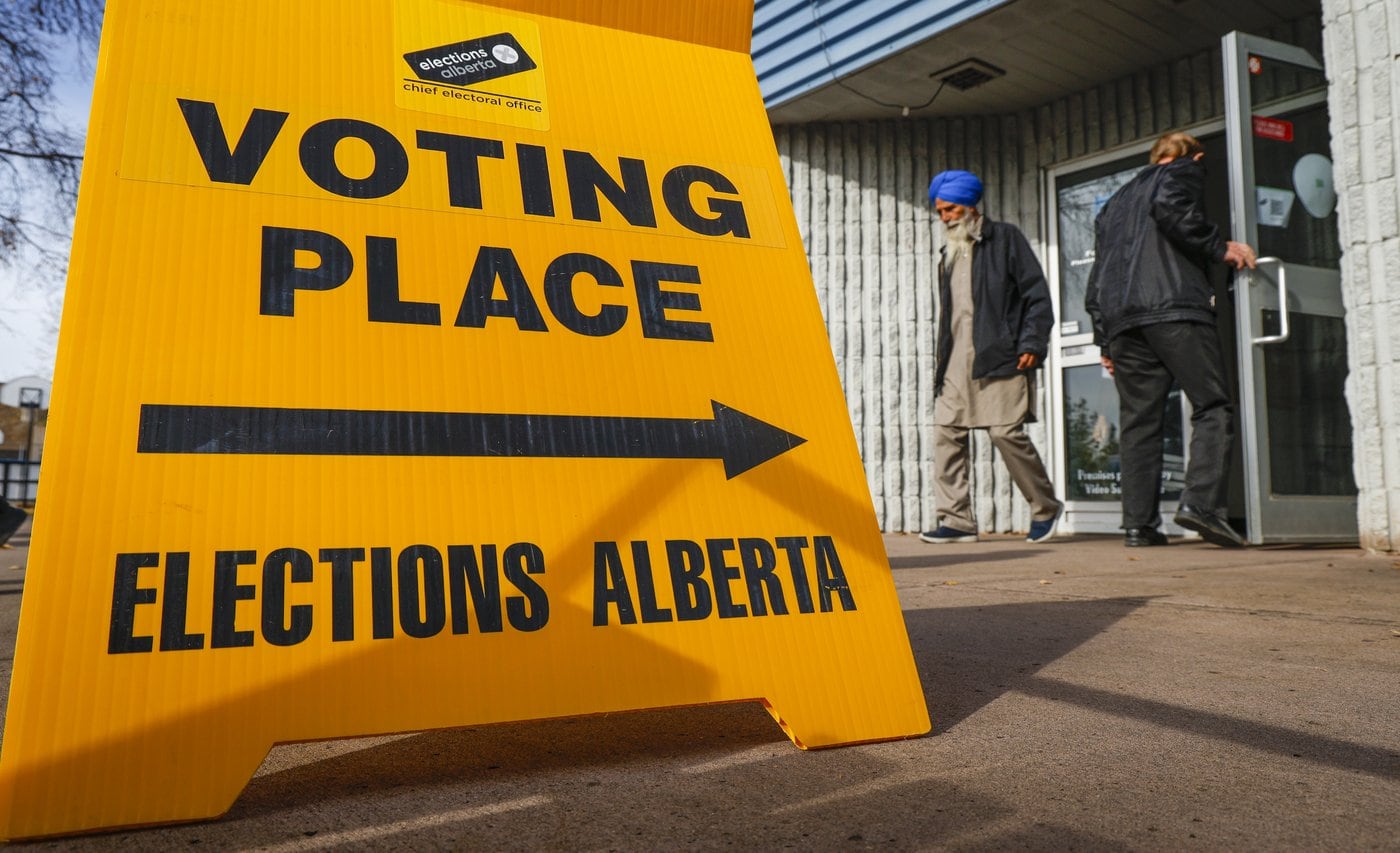
CTV News Edmonton has reported:
Elections Alberta says there is no room at voting locations for additional scrutineers appointed by third-party advertisers in Alberta’s Oct. 19 referendum. The agency has approved lists submitted by registered political parties, and only the United Conservative Party and New Democratic Party have official party status in the legislature, which requires at least four elected members.
The decision has drawn criticism from supporters of Alberta’s separatist movement, who argue that excluding outside groups’ appointees could undermine confidence in the vote. Experts say the restrictions raise concerns about balancing the interests of referendum participants, but they have seen no evidence of a coordinated effort to keep separatists from observing the process.
In an Oct. 10 post on X, Rebel News publisher Ezra Levant, a prominent supporter of Alberta’s separatist movement, shared a message from a Western Standard columnist. The columnist said they had confirmed that only people who signed up through the NDP or UCP could serve as referendum scrutineers, and had posted the previous day: “Just got an email from Elections Alberta stating that no scrutineers will be accepted from any third party advertisers at all in the referendum.”
Levant accused Elections Alberta of favouring the campaign to keep Alberta in Canada. “Elections Alberta is corrupt to the point where the integrity of the referendum is in question,” he wrote. His post had received 23,500 views as of Oct. 14. Another separatist supporter described the exclusion of third-party advertiser scrutineers as evidence the referendum was “rigged,” while a separate commenter wrote: “This is not going to help faith in the referendum at all.”
An Elections Alberta spokesperson confirmed in an email that third-party advertisers cannot appoint scrutineers for the referendum. Only people designated by parties with official status are permitted, the spokesperson said. The chief electoral officer had already approved the political parties’ scrutineer lists and could not add appointees from third-party advertisers because of space limitations.
“When we considered the size of the voting locations and the count areas, the number of workers needed in those spaces in addition to the space required for ballot boxes, there simply isn’t room for additional people in these locations,” the spokesperson said.
Scrutineers represent candidates at voting locations. Elections Alberta says they can monitor ballot handling and observe election procedures, including the count. They must be registered voters, appointed by a candidate, swear an oath of secrecy and follow the agency’s code of conduct.
Alex Marland, a professor of Canadian politics at Acadia University in Nova Scotia who has served as a scrutineer, said they can observe voters arriving, watch them submit ballots and object to ballots they examine. Scrutineers cannot speak with voters or handle ballots, he said.
The referendum contains 10 questions covering immigration and Canada’s Constitution. Its central question asks voters whether Alberta should remain in Canada or begin the process of holding a binding referendum on separation. Elections Alberta defines third-party advertisers as people, corporations or groups that spend at least $1,000 on political advertising. There are 28 registered third-party advertisers for the referendum, representing both sides of the central question.
Lori Williams, an associate professor of political science at Mount Royal University in Calgary, said the decision reflects the challenges of running a provincewide referendum with high stakes. The electoral system is designed to support political parties and their candidates during elections, she said, and is less suited to a referendum with 10 ballot questions and outside groups deeply involved in the campaign.
Elections Alberta’s website says the chief electoral officer may appoint additional scrutineers, considering the size of voting locations and the balance between the Yes and No sides. Williams said that the number of questions and the workers needed at polling sites have created crowding.
“What they’re finding is the combination with so many questions and the need for so many election workers, the polling stations are crowded,” Williams said. “And if you imagine adding all of those representatives from all of those (third party advertisers), it could get pretty problematic in a big hurry. So part of the problem here is that we’ve got a process that’s unprecedented.”
Both the UCP and NDP officially support the campaign for Alberta to remain in Canada. Williams said the restrictions raise questions about how to balance the interests of parties and groups involved in the referendum, but she sees no evidence that Elections Alberta is trying to exclude one side. Rather, she said, the situation exposes a system built around official parties and candidates instead of issues.
“It’s certainly not a deliberate conspiracy, but of course, it also raises questions about legitimacy if only one side, those that are on the federal side, are allowed to act as scrutineers,” Williams said.
The report was first published Oct. 15, 2026, by The Canadian Press. Timon Johnson wrote the report.