
Global News Edmonton has reported:
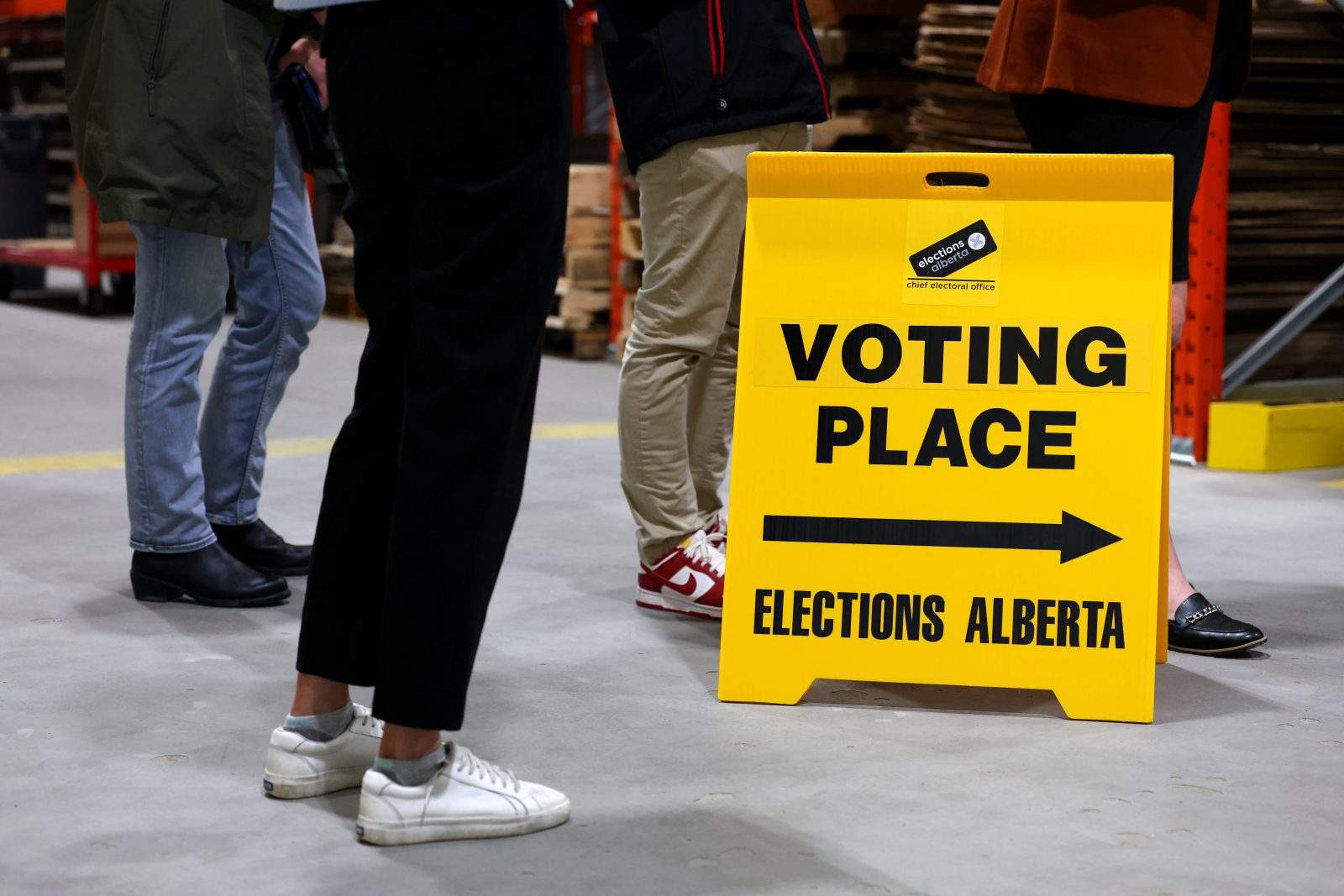
A total of 174,532 Albertans voted on the first day of advance polls for the province’s referendum, Elections Alberta said Tuesday. The Monday turnout came on the first of five advance polling days before the Oct. 19 vote, which includes a question on whether Alberta should begin the process to hold a referendum on separating from Canada.
The first-day total exceeded the average of 151,727 people who voted per day during advance polls for the 2023 provincial general election. About 418,000 mail-in ballots had also been approved by Elections Alberta, adding to indications of strong early participation.
Both separatist and pro-Canada campaign groups are concentrating on getting their supporters to cast ballots, after earlier efforts to persuade voters to their respective positions. Experts say turnout will be critical to the result.
Thomas Lukaszuk, a former Alberta cabinet minister leading the Forever Canadian campaign, said his organization had approximately 18,000 volunteers working to get voters to the polls before Oct. 19. “Albertans are very passionate about being Canadian … so I’m not surprised that Albertans are lining up to cast their votes, because they’re quite angry that they’re being put through this, that they have to prove to someone how proud they are to be Canadian,” Lukaszuk said in an interview.
He said voters wanted to send a message to Alberta Premier Danielle Smith, the rest of Canada and the wider world. “And I think they want to send a strong message to (Premier) Danielle Smith, to the rest of Canada … and frankly to the world that Alberta is not going to be the weak link in our confederation.”
Lukaszuk acknowledged that separatist voters are highly motivated, saying they would “crawl over broken glass” to vote. He said Forever Canadian was “laser focused” on identifying its supporters and ensuring they cast ballots, and cautioned against assuming his side would prevail. “When polling indicates that you’re on the winning side, complacency sets in. We saw that with Brexit, we saw that in elections,” he said. “The last part of the campaign is the most important one.”
The ballot does not ask Albertans directly whether the province should separate from Canada. It asks whether they want to begin the legal process to hold a second, binding referendum on independence. There are 10 government-initiated questions in total, most concerning immigration and constitutional issues, with only one addressing the possibility of an independence referendum.
An Ipsos poll conducted Sept. 18 to 22 exclusively for Global News found that 70 per cent of Alberta respondents wanted to remain part of Canada, while 20 per cent said they wanted an independence referendum. The findings indicate that more people may support holding a referendum than leaving Canada: 20 per cent said they would vote to hold a binding referendum, compared with 14 per cent who said they would vote to leave.
The poll also found 76 per cent of respondents knew the ballot contained multiple questions, and 62 per cent intended to vote on all 10. The findings point to a distinction between supporting a vote on independence and supporting separation itself.
Andrew MacKendrick, a former political staffer who has worked for both the Alberta NDP and the federal Liberals, said voters may be considering the referendum alongside wider concerns. He said the possibility of a binding independence vote amid geopolitical and economic uncertainty could encourage people to participate.
“We have daily updates of whatever Trump is saying about Canada, we have companies all over the country talking about layoffs because of tariffs. And I think the risk factor is so large right now that the frustration (of the referendum) gets combined with, ‘There’s a big risk if I don’t participate,’” MacKendrick said in an interview. “I think there’s a much higher combined motivation-risk vote that hopefully most folks will pick up on.”