
Edmonton Journal has reported:
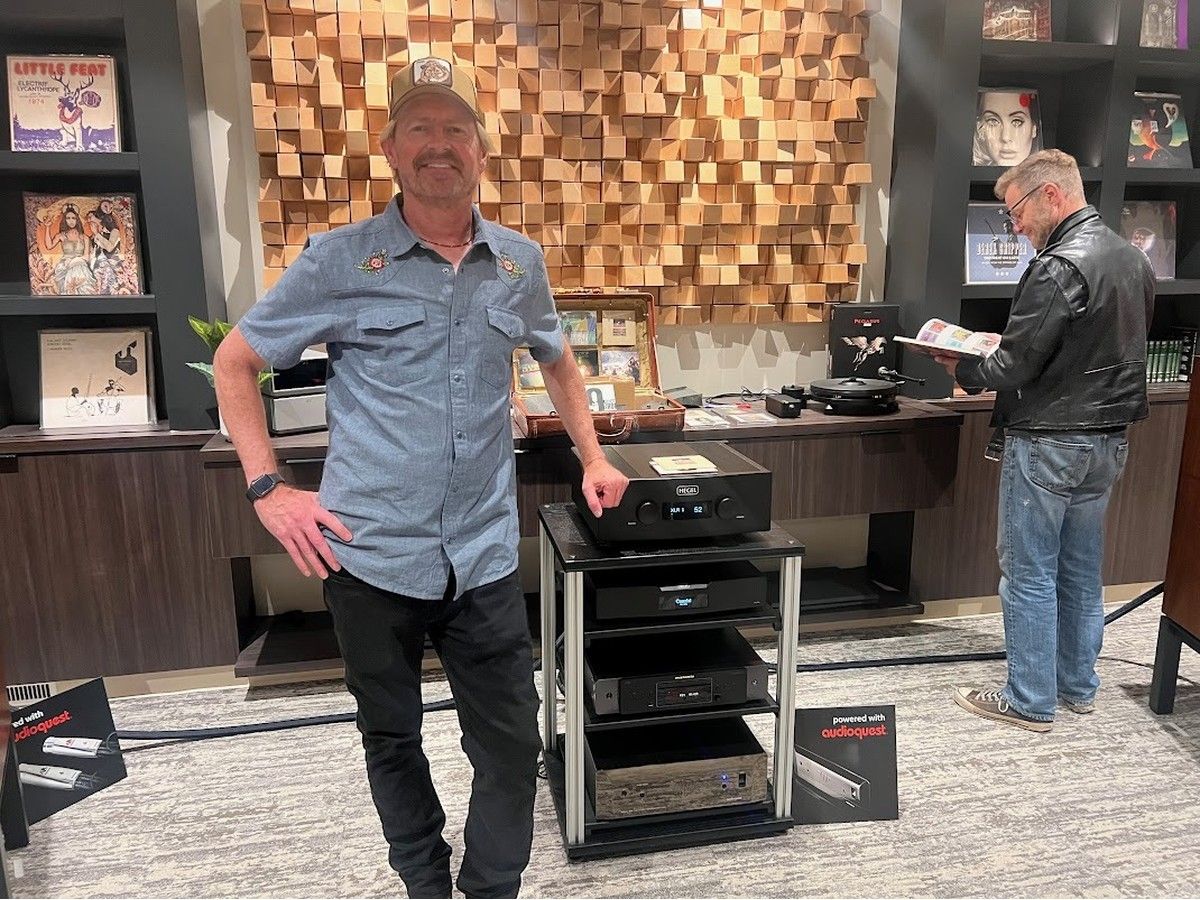
Edmonton musician Everett LaRoi celebrated the release of his new album, the Dept. 9 Sessions, with two sets on the sales floor at Audio Ark, a high-end hi-fi shop on 124 Street. Instead of performing at a bar, he invited listeners to hear the collection of heartfelt songs through the shop’s audiophile sound equipment. In one of the listening rooms, people could play the album; another room carried video of LaRoi and his band performing in the studio through a separate high-end system.
LaRoi was listening rather than singing when he described the sound. “It sounds better than the studio,” he said.
The event reflects a wider interest in listening closely to music and in physical formats such as vinyl, CDs and cassettes. The trend is gathering in Edmonton at Audio Ark, where the listening rooms are available for get-togethers. The shop’s rooms give people a chance to hear music through advanced audio equipment even if they cannot spend thousands of dollars on a turntable or $300 to $400 on a Dragonfly stick that improves streamed audio.
Streaming services such as iTunes and Spotify have been available long enough that many younger listeners have grown up with vast catalogues on demand at all hours. They have not had to search from record store to record store for a hard-to-find Pavement EP, or bring an album to a shop counter and face judgement from clerks.
Yet the abundance of digital music has coincided with renewed interest among young listeners in CDs and vinyl. Global physical music sales reached US$2.1 billion last year, the highest total in a decade, while CD sales in the United States rose 16 per cent. Vinyl sales have increased globally for 19 consecutive years, and inexpensive turntables are now sold in drug stores.
Cassettes have made a particularly notable return, with sales doubling annually, according to the source material. Smaller artists can use the format as an inexpensive way to distribute music, while established performers including Jack White, Snoop Dogg and Taylor Swift have also issued cassette releases. The renewed interest has revived the idea of a mixtape as a carefully assembled musical message for a crush. A mixtape could run 90 minutes and act as a sonic love letter, even if the effort often failed; streaming playlists do not offer the same experience.
The return of physical media has also brought fresh attention to albums as complete works, heard from beginning to end. Listeners may want the heartbeats and screams scattered through Pink Floyd’s The Dark Side of the Moon, the heavy reverb of My Bloody Valentine’s underground classic Loveless, the biblical stories across the Pixies’ Doolittle or the blues-rock sound of the Rolling Stones’ Let It Bleed. The attraction can include learning where and when songs were recorded, who a breakup song concerns and how a sequencing error made the beat and melody mismatch in New Order’s dance track “Blue Monday,” producing what became its defining effect.
Close-listening parties, where people gather to focus on a record played on a top-end hi-fi system, are increasing around the world, particularly in Germany and Japan. Audio Ark has begun hosting them in Edmonton. Steph Patsula, a sound and interdisciplinary artist who works at the shop, has organized listening events there for New Music Edmonton, an organization that champions experimental soundmaking.
Patsula said Audio Ark is moving beyond simply selling equipment and becoming a place where people can appreciate music in new ways. For people accustomed to playing tracks through a phone or laptop, hearing them on top-of-the-line speakers connected to amplifiers can make familiar recordings seem new again.
“We’ve always had folks who wanted to get as close to the music as they could get, and we still kind of draw that clientele,” said Patsula. “But what I’m really noticing is this shift in media, physical media, is a new generation of people who really love to have their cassette players and their CD players, and artists who are making releases on vinyl and CD and cassette. And so, having those actual objects to listen to, they come with all these special textures and artifacts and ways of listening. So I guess you could say with a younger audience, it’s just about a kind of a closer listening.”
Patsula described handling an album as part of the experience, from studying its artwork to reading the liner notes and learning who played instruments on individual tracks. “If I’m holding this record in my hands, having my headphones on, and just looking through the album liner, and looking at like the album art, and finding out, this is the person who did the instrumentation on this track or that track - it becomes this kind of embodied experience of listening. You’re activating all of your senses.”
For LaRoi, the event offers a way to reach listeners beyond conventional music coverage. Radio play can be difficult to secure, and the number of outlets reviewing new releases has declined. He said musicians need different ways to sustain attention on their work after investing years in writing and producing an album.
“I think for contemporary musicians, it’s about trying to find different things to do to sustain some kind of attention on your your work, because the big collective sigh of musicians everywhere is working years on a release, putting everything into it and slaving over it, the writing and then the production, releasing it, and then it gets spat out of the news cycle in about three weeks.”
Patsula said Audio Ark plans to expand the listening room program, which currently runs at a monthly pace. Artist Elliot Rose is scheduled for a one-month residency in November, pairing paintings with music. Bring-your-own-record events are planned for 2027, giving participants a chance to choose an album and discuss what they hear.
“Bring out a record, let’s listen, let’s have a beverage or two, and talk about what we hear,” she said.