
Responsible Statecraft has reported:
U.S. Defense Secretary Pete Hegseth has announced a 20 per cent reduction in the number of general and flag officers, a change estimated to affect 800 positions and scheduled to take effect Jan. 1, 2027. A commentary in Responsible Statecraft argues that the review should focus on the power exercised by regional combatant commands, whose leaders, it says, have moved beyond military duties into policy, diplomacy and public messaging.
Hegseth described the cuts in a recent “State of the Force” address as “accountability and long overdue.” Critics, according to the commentary, have characterized the move as either revenge against the general officer class or misguided personnel policy. The article says the secretary’s effort could address a wider problem, but only if the reduction’s structure and criteria scrutinize the authority regional commands wield.
The argument centres on the balance between civilian and military authority in the United States. The country’s founders chose to place the military under civilian control, leaving policy and politics to people elected or appointed by the public. The commentary says some senior military leaders have gone beyond their proper remit by becoming involved in decisions away from the battlefield.
It identifies the regional combatant commands, known as COCOMs, as the area where that balance is most out of step. Their leaders oversee U.S. forces stationed across major regions of the world and, the article says, have developed significant influence in Washington. It describes commanders as taking on roles as strategists, diplomats, political operators and public relations figures, beyond the intended scope of military leadership.
The article points to the commands’ own legislative affairs and public affairs staffs as evidence of their independent reach. The Pentagon performs similar functions in Washington, it says. Although some coordination takes place, the commentary’s author says the regional commands operate largely on their own, at most working in parallel with civilian officials.
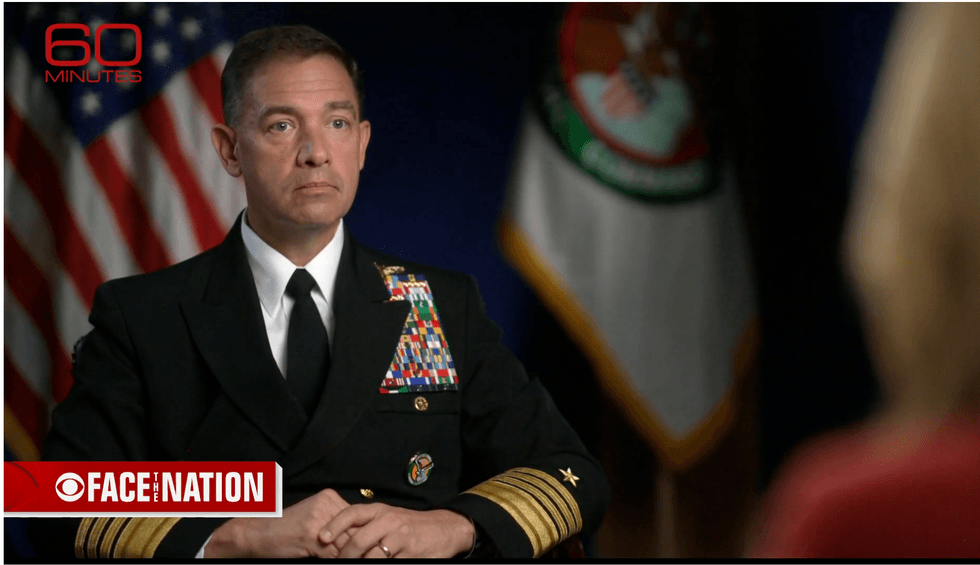
One example concerns Admiral Brad Cooper, commander of U.S. Central Command, or CENTCOM. Since the start of Operation Epic Fury, he has met with senior government officials in the Middle East, including Saudi Crown Prince Mohammed bin Salman, Israeli Defense Minister Israel Katz and Lebanese President Joseph Aoun. CENTCOM’s public statements about those meetings, the article says, did not identify a civilian counterpart of equal rank; Cooper was the highest-ranking U.S. official present.
The author argues that meetings with foreign leaders at that level should be led by the U.S. president or Cabinet members. Regional commanders could attend at the president’s or defence secretary’s discretion, the article says, but should not lead or be deputized to lead such engagements without civilian officials present. It draws a distinction between those political and diplomatic exchanges and military-to-military meetings with allies or adversaries, which it calls an essential way to maintain regional connections.
The commentary says a similar pattern occurred in 2023, while the United States remained heavily engaged in providing proxy support to Ukraine. General Chris Cavoli, then commander of U.S. European Command, or EUCOM, held comparable engagements, including a meeting with Ukrainian President Volodymyr Zelenskyy. The author says civilian leaders of suitable seniority should be present at meetings with foreign government leaders and should direct those conversations, while military commanders remain central to military-to-military relations.
The article also raises concerns about commanders’ public profile and contacts in Washington. It says regional COCOM chiefs often build relationships with senators and representatives independently, without civilian counterparts. The Senate Armed Services Committee, or SASC, vets and confirms civilian appointees and promotions to regional combatant command leadership posts, but, according to the commentary, calls military leaders alone to testify at its annual posture hearings. The House Armed Services Committee, or HASC, hears from both civilian and military officials at its annual hearings.
Media appearances by regional commanders present another risk, the author argues, because statements on politically charged issues can be overstated, understated or contradicted. The commentary cites CENTCOM and U.S. Pacific Command, or PACOM, as examples of commands entering the media debate during the Iran war. It says the resulting public discussion showed the dangers of commanders speaking on issues connected to policy and resource choices.
In mid-September, Cooper told 60 Minutes, “I am not concerned at all,” when asked about widely reported shortages in U.S. critical munitions stockpiles resulting from the Iran war. The article says depleted stocks and lengthy replenishment timelines have seriously affected U.S. plans to deter China from invading Taiwan because the same weapons are needed to make deterrence credible.
One week after Cooper’s interview, Time Magazine published an exclusive profile of Admiral Samuel Paparo, commander of USPACOM. The profile focused on why prioritizing deterrence in the Pacific is essential to preventing war between the United States and China. The commentary says the authors highlighted differences between Paparo’s public remarks and reported private comments about how spending resources in the Middle East is harming the Pacific deterrence mission.
The author says the interviews produced damaging public relations for the Pentagon and exposed factionalism among military leaders who take on policymaking roles. More broadly, the commentary describes the overlap between civilian and military responsibilities at regional commands as an underreported issue, and says Hegseth’s proposed cuts create an opportunity to address it.
It urges the secretary and his team to consider reducing the rank and resources assigned to regional COCOMs, bringing them into closer alignment with civilian leadership. Under that approach, civilian officials would oversee and direct commanders’ activities outside explicitly military responsibilities. The article concludes that stars and medals represent sacrifice and bravery, but should not signal authority above civilian leaders, arguing that civilian control of the military is essential to the American republic.