
Autosport and RaceFans have reported:
Max Verstappen kept pole position for Saturday’s sprint at the Marina Bay circuit in Singapore after stewards found he passed Lewis Hamilton under yellow flags but decided not to impose a penalty. They concluded the overtake was an unfortunate consequence of a substantial speed difference between the two cars and accepted Verstappen’s account of the incident.
The stewards said Verstappen, identified in their report as car three, was on a push lap and approaching Hamilton, car 44, as he exited turn seven. A single yellow flag was displayed, and Hamilton had been warned that Verstappen was approaching. Hamilton said he slowed after turn seven and moved right to leave the racing line. Verstappen passed him before turn eight, while both cars remained in the yellow-flag sector, then abandoned his push lap.
Verstappen told the stewards he was on the throttle out of turn seven, saw the yellow flag and lifted. Telemetry confirmed his account: he was fully off the throttle within about 40 metres of entering the yellow-flag sector. He had also started braking by the time of the pass, while Hamilton had braked and reduced his speed to less than 60 km/h.
The stewards said the speed difference at the overlap was significant because Verstappen had been on a push lap and Hamilton had slowed. Verstappen’s speed at the pass was about 70 km/h lower than his speed on another push lap in the same session. He said avoiding the overtake would have required very heavy braking, which he believed could have created an unsafe situation. The stewards found that he breached the yellow-flag regulation, but accepted that he reacted appropriately by lifting off the throttle and reducing speed. They decided not to penalize him.
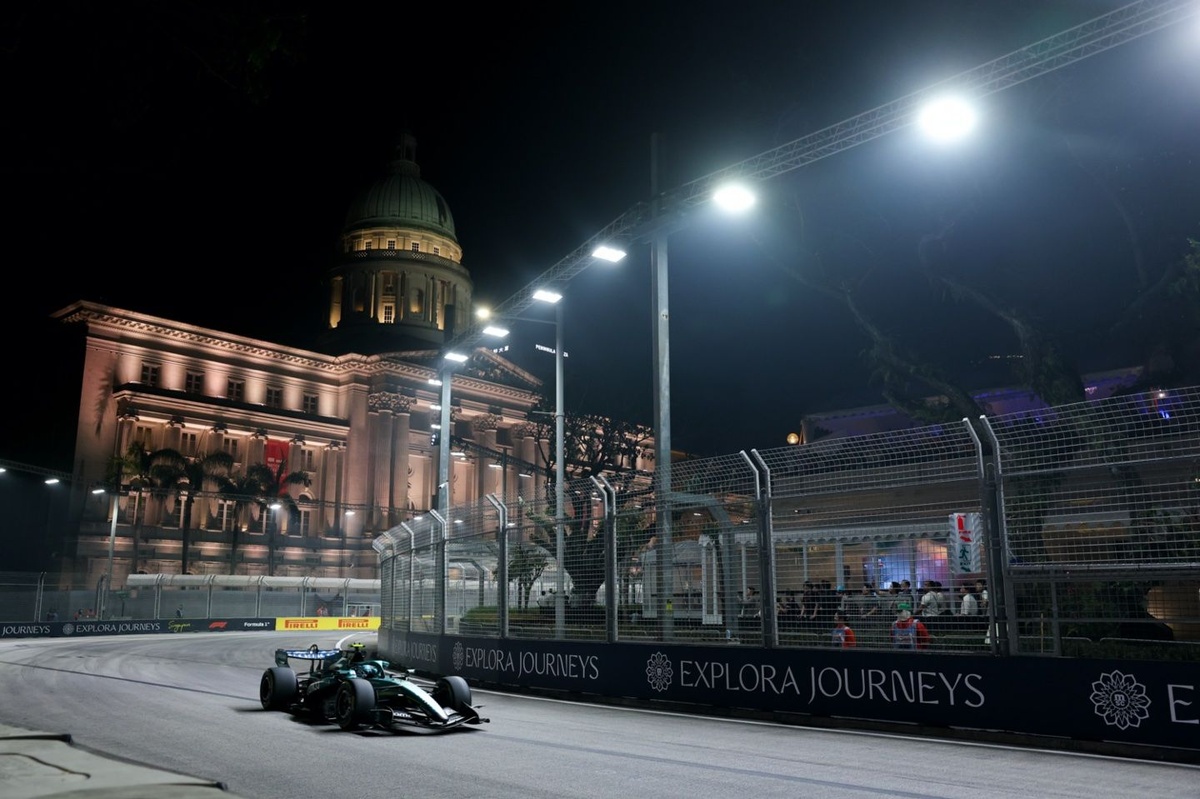
Separately, a race control error during sprint qualifying left several teams frustrated and Aston Martin weighing whether to take further action. The first segment, SQ1, was stopped by a red flag so officials could clear debris from Sergio Perez’s front wing. When the session resumed, a human error meant Overtake Mode, the power boost normally available throughout qualifying, was not turned back on.
Several drivers reported that their cars lacked power because they were not receiving the additional electric boost. After the mistake was noticed, a race control official activated Overtake Mode for 27 seconds, then deactivated it again. The error affected SQ1 because some drivers had set their best laps before the stoppage with the mode available, while others could not improve after the restart or fell outside the top-16 cut-off.
Most cars were affected to some degree, but Arvid Lindblad, Lance Stroll and both Williams cars were particularly affected and eliminated in SQ1. Williams asked race control after the segment to let all 22 cars take part in SQ2, effectively restarting with a clean slate. The stewards denied the request because they were unsure they had the authority under the regulations. A request to rerun SQ1 also could not be granted because there were not enough tyre sets available.
FIA single-seater director Nikolas Tombazis met with affected teams and drivers. Williams and Racing Bulls were understood to be extremely frustrated, though neither planned to protest the qualifying result. Aston Martin kept its options open pending any further FIA action, seeking a fair and equal starting grid for Saturday morning’s sprint. The team was unsure whether the governing body could correct the result without causing further disagreement across the grid. Sources indicated the result would most likely stand.
The FIA’s apology said: “During the first period of Sprint Qualifying there was a human error in Race Control unrelated to the timing issue also encountered in SQ1.” It added: “This issue in question meant Overtake Mode was not available after the red flag period during SQ1. When it became apparent that Overtake Mode was not active after the restart, it was then activated for a period of 27 seconds before being deactivated again.” The statement said the error affected some cars’ performance depending on when they ran and their position around the lap, while the second and third periods of sprint qualifying were unaffected.
A separate timing problem, controlled by F1 management, failed to register several lap times in SQ1. The missing times left some drivers uncertain whether they had advanced to SQ2 and added to the confusion. The race control incident was the second major software-related problem in two consecutive weekends, following a delay to the start of last week’s Bahrain Grand Prix in Malaysia because of a power-unit control systems software glitch.