
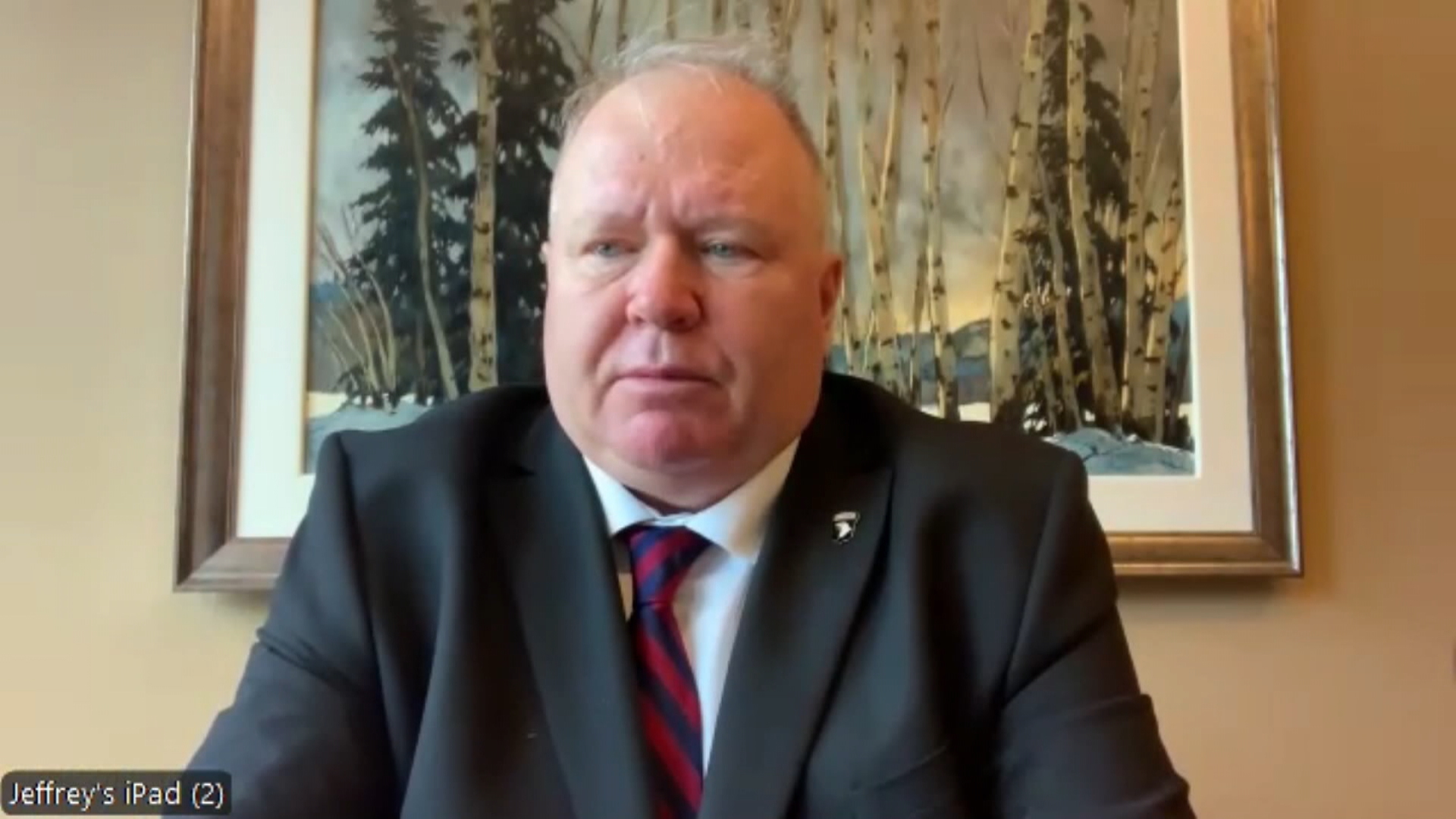
Global News Edmonton has reported:
Two U.S. litigation funders are seeking $112.56 million from Alberta separatist leader Jeffrey Rath and his professional corporation, RathPC, alleging they were misled into financing First Nations lawsuits after one of the nations had fired Rath and his firm. The lawsuit was filed Thursday by Delaware-based Diriba Investments and Western Springs Investments. The allegations have not been proven in court, and Rath has not yet filed a statement of defence.
The lenders allege Rath and RathPC made “false, inaccurate, and misleading” representations to keep receiving millions of dollars to fund claims against the federal government. They say Rath did not tell them Thunderchild First Nation had terminated his firm in September 2019 until November 2024, and accuse him of making statements “knowing them to be false, or recklessly, without regard for their truth or falsity.” The investors say they would not have continued advancing money if they had known of the termination.
The filing escalates a dispute that the funders signalled in court documents in late September, when they said they intended to call in a debt then estimated at nearly $109 million. They allege Rath had failed for more than two months to provide requested financial statements and an accounting of proceeds from the litigation they financed. The suit was filed on the same day a judge rejected Rath’s separate request to access nearly $800,000 in frozen funds.
The lenders say they signed an agreement with RathPC in December 2018 to advance $25 million in five payments for lawsuits brought by Thunderchild and Moosomin First Nations in Saskatchewan. Rath received $10 million in 2018, then three payments of $3.75 million each between 2021 and 2023. The investors did not provide a fifth $3.75-million payment, alleging Rath failed to obtain specialized life insurance required under the agreement.
The contract, according to the lawsuit, entitled the lenders to annual returns of 25 to 35 per cent, compounded annually, as well as five per cent of net proceeds. The claim does not explain how the lenders calculated the $112.56 million they now seek. They assert broad contractual rights over proceeds from RathPC’s First Nations cases and other legal work covered by the agreement, and seek the full amount from both RathPC and Rath personally, citing alleged breaches that include asset dissipation and failure to report money they say was owed to them.
The funders also allege Rath failed to disclose Law Society of Alberta proceedings in which he admitted misconduct related to his representation of Thunderchild after the nation had fired him. He was ordered to pay $10,000 in costs. After other law firms took over the Thunderchild and Moosomin cases and obtained large settlements, Rath sued the two nations for nearly $60 million in contingency fees he says he is owed. Both First Nations deny his allegations. The lenders say the contract lets them “step in” and take over the claims, with any recovery going to them rather than Rath.
The investors further say the Tallcree litigation exposed another $90 million in unpaid fees RathPC is pursuing from concluded settlements, claims they allege had not been fully disclosed. The Tallcree dispute has set off a chain of legal actions involving Rath, his firm and First Nations whose settlement trusts he administered. Sturgeon Lake Cree Nation and Tallcree First Nation are separately suing Rath over millions of dollars they allege were withdrawn from their trusts without consent.
In 2017, RathPC received an $11.5-million contingency fee after Tallcree settled a $57.6-million claim with Ottawa. The firm then became trustee for funds held for beneficiaries, including minors. A judge later found the fee unreasonable and ordered $8.5 million returned to the trust. Tallcree alleges RathPC later withdrew that same amount instead of distributing it to beneficiaries.
Tallcree and Sturgeon Lake allege that roughly $6 million and $12 million, respectively, were improperly withdrawn from their trusts in disputed administration and legal fees. Rath denies misappropriating funds. He says he obtained legal advice before imposing an annual administration fee of three per cent on the trusts’ declining balances. He filed statements of account detailing fees charged to the Tallcree Trust and timesheets describing work by lawyers in his firm. Rath maintains the litigation is part of a years-long effort by Tallcree’s leadership to gain control of the trust.
“No funds were misappropriated from the Trust by myself or any lawyer or staff at Rath & Company or RathPC,” Rath said in court records. In July, the court froze assets belonging to Rath and his firm under an interim Mareva injunction and appointed an investigative receiver to trace disputed funds. The American lenders have applied to have the receiver act on their behalf as well. The receiver has since alleged that the $8.5-million refund was funded in part by an $11.5-million transfer from the Sturgeon Lake Cree Nation Trust, another Rath client.
Tallcree escalated its case on Sept. 4, seeking a $15-million judgment and broader authority for the receiver to recover disputed trust assets and enforce the court’s decision. The application is scheduled to be heard Oct. 29 and 30. The court order permits the receiver to release some funds to Rath for approved legal and living expenses; he has previously received $135,000.
On Sept. 11, Rath applied for nearly another $800,000 from the frozen funds, including $350,000 for legal fees and almost $280,000 for horse-racing bills. He said he needed the money for legal and personal expenses, much of it tied to his North American horse-racing “hobby.” Tallcree opposed the request, arguing that $3 million held by Rath’s former lawyers could be traced to the disputed $8.5-million refund.
Bank records show both sums passed through the same RathPC account. The refund had earlier been used to buy $8 million in bullion and issue Rath a $500,000 draft. Court records show that eight months later the same account sent $3 million to his former lawyers. Rath said in an affidavit that the injunction and receivership put the future of his law firm “at serious risk.” He said two lawyers had resigned and the orders jeopardized efforts to collect $90 million in outstanding fees, the same fees the funders say could be covered by their agreement.
Rath described the Mareva order as “entirely unjustified” and “not supported by any evidence,” and said the freeze and receivership were “hindering my ability to live.” He has filed four appeals challenging his removal as trustee, the asset freeze, the receivership and the receiver’s access to the firm’s records. Justice Lorena Harris rejected his latest request for funds, finding he had not given a full account of his assets and financial position despite being ordered to do so. “I have no confidence that the Rath Applicants’ disclosure is complete, transparent or reliable,” Harris wrote. She stressed that she was not finding Rath or his firm actually held undisclosed assets.
During an acrimonious Sept. 17 cross-examination, Tallcree lawyer Matthew Sammon challenged the financial disclosures Rath and RathPC submitted under the Mareva order. Sammon alleged Rath’s disclosure left out three boats, a numbered company that had recently received $2.92 million from RathPC, and at least four Royal Bank of Canada accounts. RathPC’s disclosure listed none of its bank or investment accounts. The receiver later identified at least 31 accounts belonging to Rath and RathPC at nine financial institutions, according to its second report, filed Sept. 14. Rath denied deliberately hiding assets and said the omissions were mistakes.
Rath’s application for access to frozen money included invoices for farriers, veterinarians, trainers, hauling, boarding and racing in Alberta and several U.S. states, as well as phone and life insurance bills. He also sought $150,000 for unspecified future expenses. Global News found several invoices were already overdue when the Mareva order was imposed, including at least three horse-related bills more than a year old. Harris found the expenses were not “ordinary, necessary living expenses.” Rath had not listed the horses in the court-ordered disclosure of worldwide assets. Asked repeatedly how many he owned, he said he did not know exactly and estimated “more than 10 and less than 30.” He said he left them out because he regarded them as “liabilities,” not assets.
Rath declined to answer questions from Global News, saying: “Please stop bothering me.” He built a practice suing the federal government for First Nations and obtained treaty and claims settlements worth tens of millions of dollars. The lenders’ case offers a rare account of large-scale litigation financing and the amount Rath was underwritten for two of at least a dozen First Nations claims he pursued. Litigation funding is a large and controversial industry, mainly in the United States, in which outside investors pay legal costs in exchange for a share of compensation if a case succeeds.