
Women who become leaders of political parties often do so when those parties are already struggling, a University of Calgary political scientist says. Melanee Thomas, who studies gender and politics, said the pattern is sometimes called a “glass cliff,” but she prefers “gendered political opportunity structure” because women actively assess and pursue openings that may be scarce when parties are strong.
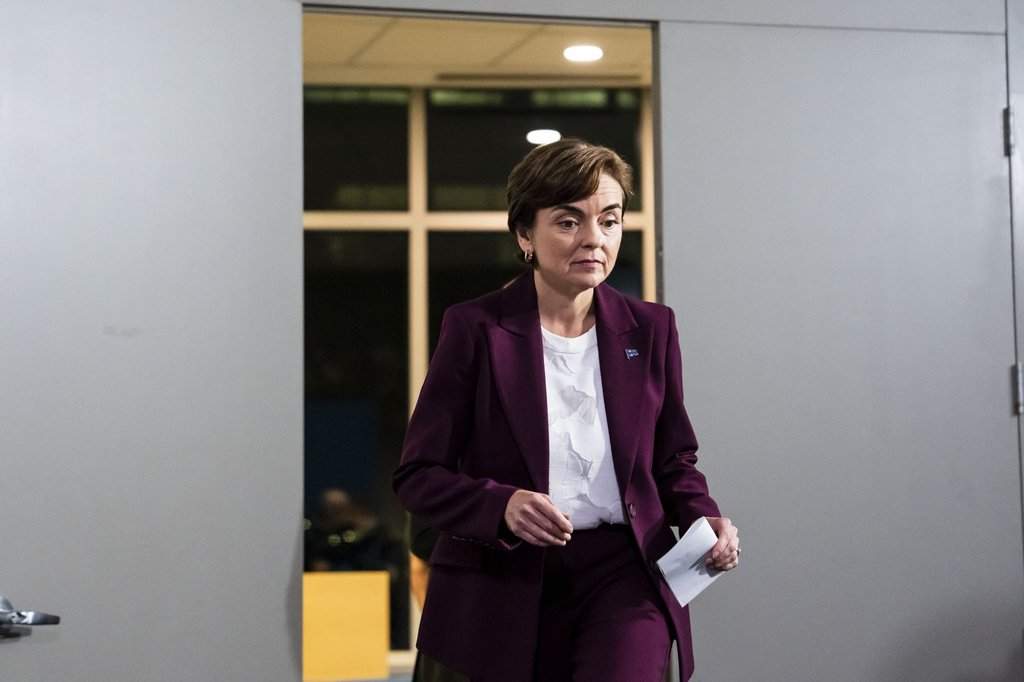
The debate has resurfaced after former Quebec premier Christine Fréchette lost an election and resigned. She took over as leader of the governing Coalition Avenir Québec (CAQ) months before the vote, following the departure of longtime premier François Legault. At the time, support for the CAQ was at an all-time low, and the party had been beset by scandals and troubled projects.
Those included the SAAQclic fiasco, a controversial bill to change doctors’ pay and the failed Northvolt project, among other problems. Thomas said any leader would have faced substantial difficulty trying to rebrand a party that had spent years being associated with scandal and its previous premier. She said gender should also be considered when examining who is chosen to lead parties during periods of difficulty.
The “glass cliff” label comes from business research and describes women being elevated to leadership when an organization or political party is in crisis. Thomas said the term can make women sound like passive candidates being put in positions where failure is likely. Her preferred concept emphasizes that women are political actors who recognize that chances to lead often become more available when a party is having trouble.
Political leadership, especially in government, is among the most sought-after work in politics, Thomas said. When parties are doing well, leadership contests tend to draw a familiar kind of candidate, often men with traditional political résumés. Women face higher barriers in those contests, she said, while openings more often arise when parties are electorally vulnerable or trying to recover from scandal, internal turmoil or voter dissatisfaction.
Thomas pointed to former Quebec premier Pauline Marois, who had long-standing ambitions to lead and extensive cabinet experience. She became leader of the Parti Québécois only after the party had entered a period of crisis. Thomas said the example illustrates how qualifications and ambition do not necessarily translate into an opportunity to lead when political circumstances favour other candidates.
“Women want the power jobs in politics,” Thomas said. “I think they are strategic enough to read the room and know what their chances are going to be when things are really good, and know that their only chance might be when things aren’t great.”
She also compared the pattern with former prime minister Kim Campbell. Campbell became leader of the Progressive Conservative Party and prime minister shortly before the party suffered a historic defeat in the 1993 federal election. “Was it Kim Campbell’s fault? No,” Thomas said. “But do people still blame her specifically for it? Not everyone, but some absolutely do.”
Research indicates that women politicians can be judged by different standards from men, Thomas said. Experimental studies have found that some voters continue to hold stereotypical views about women’s suitability for political office. Other studies have found that female candidates may need to show stronger qualifications than men to receive similar evaluations.
“Women candidates have to be significantly more credentialed,” she said. “They have to have way better CVs to be evaluated the same way as men.” Thomas said women who secure leadership positions in favourable political circumstances can still face greater pressure and may be pushed out sooner than male leaders.
She argued that women should not avoid leadership opportunities because the odds of success are uncertain. Politics is competitive, and most candidates lose regardless of gender, she said. Participation remains essential to a healthy democracy, Thomas told Global News in a phone interview, adding that young women and girls need to see women seek office, sometimes win and succeed, and sometimes fail, survive the setback and continue their careers.
“(Women) have to be willing to participate and lose. That is a core feature of democracy.”
“Anybody who wants to do it should go for it.”
Thomas said research has found that as more women are elected, girls and women are more likely to view politics as a place where they belong. She said attention should extend beyond whether women leaders succeed or fail to why they continue to be viewed differently from men facing the same political challenges.
“Many politicians do good things, and many do things people think are dumb. The fact that when women do those things it is seen as a reflection of women as a whole, while men are not seen as a reflection of all men, shows exactly why this pattern persists.”
On Monday, 57 women were elected to Quebec’s national assembly, representing about 45 per cent of its 127 seats. That total was slightly lower than the number of women elected in 2022.
Based on reporting by Global News Edmonton.