
Thirty-two prominent Iranians issued an open letter on Sept. 28 urging Iran to withdraw urgently from the Nuclear Non-Proliferation Treaty (NPT), halt cooperation with the International Atomic Energy Agency (IAEA) under the treaty and begin the withdrawal process. The signatories called on President Masoud Pezeshkian, parliament and the Supreme National Security Council (SNSC) to act. Many of the signatories served in conservative administrations.
The appeal came as international attention was focused on conflict in the Strait of Hormuz and debates at the United Nations General Assembly. It adds to repeated efforts by ultraconservative lawmakers to pull Iran out of the treaty, which commits most countries not to develop nuclear weapons. Iran has remained a member despite war, severe economic pressure and the return of United Nations sanctions.
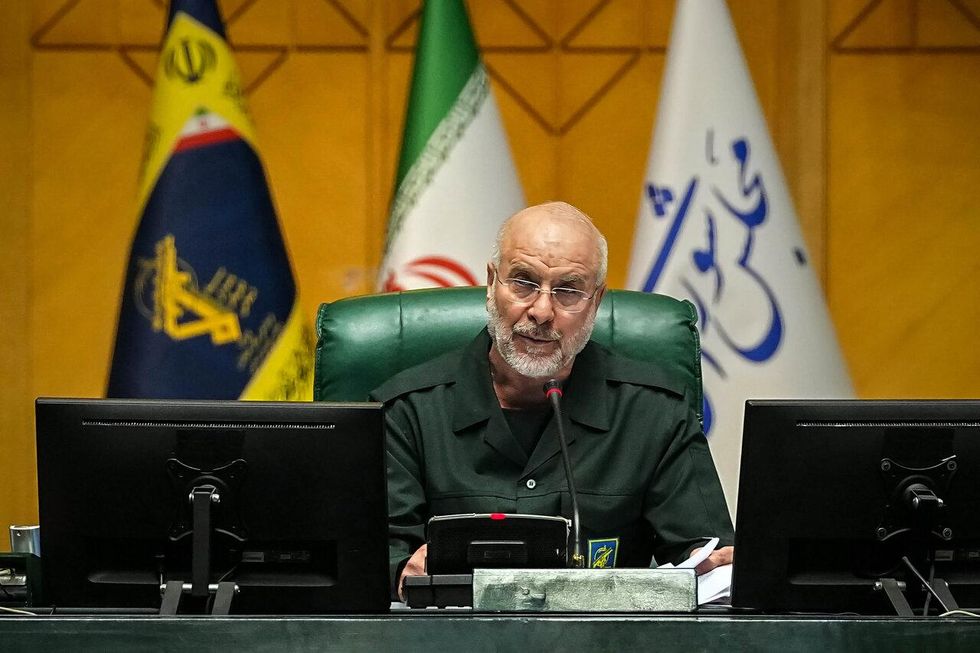
After the United Nations sanctions “snapback” in September 2025, lawmakers regularly pressed for withdrawal. The Majles, Iran’s parliament, drafted a bill that year to begin the process, but it has not advanced. In September, some lawmakers submitted new legislation described as “triple-urgency” to Majles President Mohammad Baqer Ghalibaf, who is also Iran’s chief negotiator. Whether Ghalibaf moves the measure forward could offer a sign of political alignments, though it may not determine what Iran ultimately does.
A parliamentary law would not, on its own, compel the executive to withdraw. The SNSC oversees major national security and foreign policy issues, including decisions on Iran’s nuclear file. Its authority was demonstrated in August 2024, when it suspended the “Chastity and Hijab Law” after judging the matter crucial to national security.
The letter’s signatories come from the conservative camp, which has historically opposed negotiations with the United States and denounced the 2015 Iran nuclear deal. Some conservatives had supported the idea of normalization in 2012. Since 2022, amid stalled U.S.-Iran negotiations, the camp’s most radical members, known as ultraconservatives, have publicly advocated leaving the NPT.
Among those advocates are Saeed Jalili, who headed Iran’s nuclear negotiating team from 2007 to 2013 and ran unsuccessfully against Pezeshkian in 2024, and Hamid Rasaee, a lawmaker and member of the Stability Front, a far-right subgroup within the conservative camp. The war between the United States and Iran in 2025, however, ended the conservatives’ exclusive hold over the withdrawal debate, according to the source report.
Some figures in the “moderate” camp, made up of reformists and centrists who traditionally backed normalization with the West, have also shifted their positions since the war. Journalist Ali Nazari, known as a moderate, now supports developing a nuclear weapon, going beyond support for leaving the treaty. The wider debate therefore includes distinct positions on withdrawal and on acquiring a weapon.
Iranian political leaders have long used the possibility of NPT withdrawal as leverage in negotiations with Western countries, regardless of their political affiliation. Former President Hassan Rouhani, a strong supporter of negotiations with the West, threatened to leave the treaty in May 2005, according to his memoir. At the time, Rouhani was secretary of the SNSC and negotiating bilaterally with Russia. He made the threat in response to the prospect that the IAEA Board of Governors would refer Iran’s nuclear file to the United Nations Security Council. The board made that referral in February 2006, but Iran did not carry out the threatened withdrawal.
The present situation differs from the pre-war period because the possibility of withdrawal is no longer confined to ultraconservative lawmakers. Recent remarks by Mohsen Rezaei, the SNSC secretary, suggest that the debate may be shifting within the national security establishment. After the IAEA adopted Resolution GOV/2026/61, Rezaei wrote on X that the agency was politicizing the nuclear issue and warned that its actions could lead Iran to leave the NPT.
The resolution reiterated concerns about Iran’s limited cooperation with the IAEA but introduced no new elements compared with its predecessor. The source report said that Rezaei appeared to use it as a pretext to signal a new posture. His warning could also form part of Iran’s negotiating strategy with Washington, but no previous SNSC secretary has made such a threat. Given the council’s central role in nuclear policymaking, the remarks carry more weight than statements from lawmakers alone.
There is precedent for a convergence between an ultraconservative Majles and the SNSC. Such alignment emerged before negotiations with the IAEA were suspended in September 2025. Whether the two institutions could again come closer, this time over leaving the NPT, remains an open question. The council has not reached consensus on withdrawal, and most reformists and centrists still appear to oppose it.
Leaving the treaty would not, by itself, mean Iran had decided to build a nuclear weapon. In an interview published by Al Jazeera on Sept. 19, Rezaei reaffirmed his commitment to a 1995 fatwa by the late Supreme Leader Ali Khamenei that prohibited creating weapons of mass destruction. Rezaei also appeared to favour a diplomatic resolution to the conflict and argued Washington should accept Iran’s conditions for ending the war.
At the previous month’s United Nations General Assembly, Iran proposed ending hostilities on all fronts, unfreezing Iranian assets and lifting the blockade of Iranian ports. The proposal was consistent with a memorandum of understanding agreed by Iran and the United States in June. U.S. President Donald Trump rejected it.
It remains difficult to judge whether Rezaei’s latest warning reflects a firm intention to withdraw or another bluff in a long history of such threats. Some observers argue the religious prohibition has already lost force following Iran’s new nuclear posture, articulated in 2024, which broke what had been the Islamic Republic’s ultimate linguistic taboo. Some Iranian experts argue that withdrawal should come only after Iran has acquired a nuclear weapon, since leaving without one would invite punishment and be seen as a step toward weaponization.
Relations between Iran and the IAEA have deteriorated considerably. Tehran’s hostility toward the agency’s director-general, Rafael Grossi, has intensified. Iran holds the agency partly responsible for the 12-day War and blames it for failing to explicitly condemn Israel and the United States for attacking Iranian nuclear sites.
The adoption of Resolution GOV/2026/61 and the de facto exclusion of Mohammad Eslami, Iran’s leading nuclear official, from the IAEA’s 69th general conference in September have reinforced the view in Tehran that the agency has become politicized. These grievances form part of the backdrop to Rezaei’s warning, as well as the campaign by lawmakers to leave the treaty.
Iran’s reliance on Russia and China remains a central obstacle to withdrawal. Since the United States left the Joint Comprehensive Plan of Action (JCPOA) in 2018, Tehran has deepened cooperation with both powers. China has since absorbed nearly all of Iran’s oil exports. Internal discussions in Iran treat the potential damage to relations with Moscow and Beijing from an NPT withdrawal as a significant concern.
Rezaei’s comments could also be interpreted as a warning to Russia and China, intended to press them to use their vetoes against further anti-Iran measures at the Security Council. Iran has reason to fear abandonment: both countries previously voted to refer its nuclear file to the council and backed multilateral sanctions against it.
The withdrawal debate remains unresolved, and the SNSC has yet to reach agreement. Ghalibaf’s decision on whether to advance the anti-NPT bill will reveal something about Iran’s political dynamics, even if it does not settle the country’s course. Russia and China have again become essential to maintaining Iran’s membership, while discussion of withdrawal has intensified in Iran to an unprecedented degree.
Based on reporting by Responsible Statecraft.