
Israeli Prime Minister Benjamin Netanyahu is facing renewed scrutiny over reports that the United Arab Emirates and Egypt warned his government about a possible Hamas attack before Oct. 7, 2023. Netanyahu denies receiving a warning from the UAE, while his office has also rejected reports of warnings from Egypt. The allegations have become a focus of political debate ahead of Israel’s Oct. 27 election, as opponents criticize the security failures and Netanyahu’s handling of the attack’s aftermath.
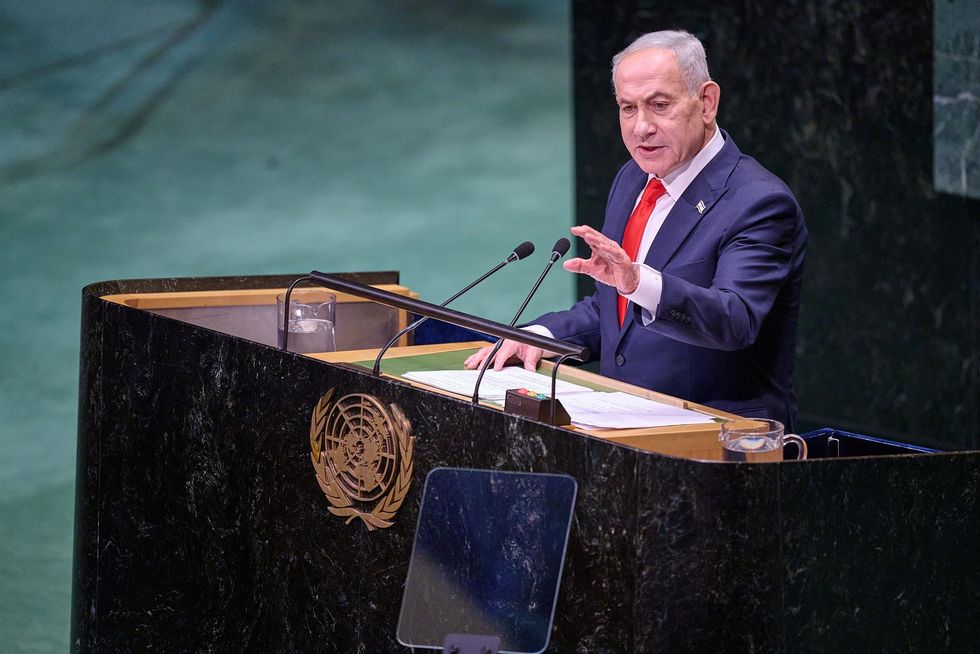
Three years after the attack, Netanyahu has described Israel’s response as one of resilience and military success. Addressing the United Nations last month, he said Israel had confronted a “seven-front war” and, “instead of collapsing,” delivered “crippling blows” to each of its enemies.
At a Monday memorial for Israelis killed in the Oct. 7 attack and its aftermath, Netanyahu said: “Thanks to the bravery of our fighters, we turned the tables.” He added: “We have removed from above us a clear and immediate danger of the annihilation of millions of our citizens.”
Netanyahu is seeking to extend his unprecedented 19 years in office in the election later this month. As he asks voters to remember his government’s response, political opponents are focusing on what he may have known before the attack and whether he shared warnings with Israeli security officials.
A recent report by the Israeli newspaper Haaretz said UAE President Mohamed bin Zayed warned Netanyahu in September 2023 that Hamas leaders were planning a major military operation. The report was based in part on a book by Haaretz journalists Shlomi Eldar and Ruth Yuval.
“Bin Zayed urged Netanyahu to take the situation seriously. To his surprise, however, the prime minister reacted with relative calm,” the report said. It said Netanyahu assessed that Hamas intended to operate in the West Bank and reassured bin Zayed that Israel was prepared for any scenario.
The book’s account links the attack partly to growing frustration within Hamas over Israel’s slow progress in talks that could have eased the blockade of Gaza and secured the release of Palestinian prisoners. Shortly before the attack, Yahya Sinwar, then Hamas leader in the Gaza Strip, reportedly told a Fatah official that if Israel did not advance negotiations, he was “preparing a huge surprise for them.” He also reportedly said they should be ready for “expect a 'zilzal,' an earthquake,” a phrase people familiar with Sinwar interpreted as a threat of war.
That threat eventually reached Netanyahu, according to the reporting. Haaretz said Israel’s defence establishment knew Hamas posed a growing threat but believed an attack would be smaller in scale. The report said Netanyahu did not tell security chiefs that he had received more explicit warnings from bin Zayed.
Netanyahu called the Haaretz report an “absolute lie.” His office told the newspaper that he “didn't speak to the president of the UAE during the period in question and received no warning from him.”
Netanyahu travelled to Abu Dhabi last month. Multiple news outlets reported that he asked bin Zayed to deny accounts of a 2023 phone call between them. The UAE has not commented on the reported conversation. The trip was initially kept secret, but the Israeli government and the official Emirati news agency later confirmed it took place.
In late September, The Atlantic reported that an Egyptian security official had also warned Israel it risked a Hamas attack unless it changed course and offered economic concessions to Gaza. The magazine said it independently confirmed that a call between Netanyahu and bin Zayed had occurred. The available reporting did not establish whether Abbas Kamel, Egypt’s intelligence director, met Netanyahu.
A former Israeli official told The Atlantic there was “no world” in which Kamel would travel to Israel to deliver such a message “and Bibi is not aware.” The Wall Street Journal reported that Kamel repeated the warning to Israel shortly afterward, just days before Oct. 7. Netanyahu’s office has denied the reports.
Haaretz also reported that, in the immediate aftermath of Oct. 7, Israel rejected diplomatic overtures from Hamas. The group offered to release all hostages younger than 18 or older than 50 “without anything in return,” other than a guarantee that negotiations on other issues would begin immediately.
According to a Palestinian intermediary cited in the report, the unofficial Israeli response was: “Netanyahu doesn't want to talk about anything. He only wants war and the elimination of Hamas.” The intermediary said the Israelis intended to free the hostages “by force.”
Netanyahu’s opponents have tied the reports about advance warnings to calls for an investigation into the security failures. Gadi Eisenkot, an Israeli general viewed as the leading contender to unseat Netanyahu, wrote on X after the Haaretz story: “more and more signs point to the same conclusion: Netanyahu led Israel blindly into the October 7 disaster.” Eisenkot has called for a commission to investigate the failures. Netanyahu opposes forming one.
Former prime ministers Naftali Bennett and Yair Lapid, whose parties have merged for the upcoming election, have also blamed Netanyahu. Bennett said: “Netanyahu bears personal and direct responsibility for the failure that led to the deaths of thousands of Israelis on his watch.” Lapid said that if the prime minister had done his job, “the massacre would have been prevented,”
Netanyahu has deflected blame for the attack, arguing that the slow response resulted from security chiefs failing to wake him. He has said that if they had done so, “everything would have been different.” “That’s the story of October 7,” he said.
Based on reporting by Responsible Statecraft.