
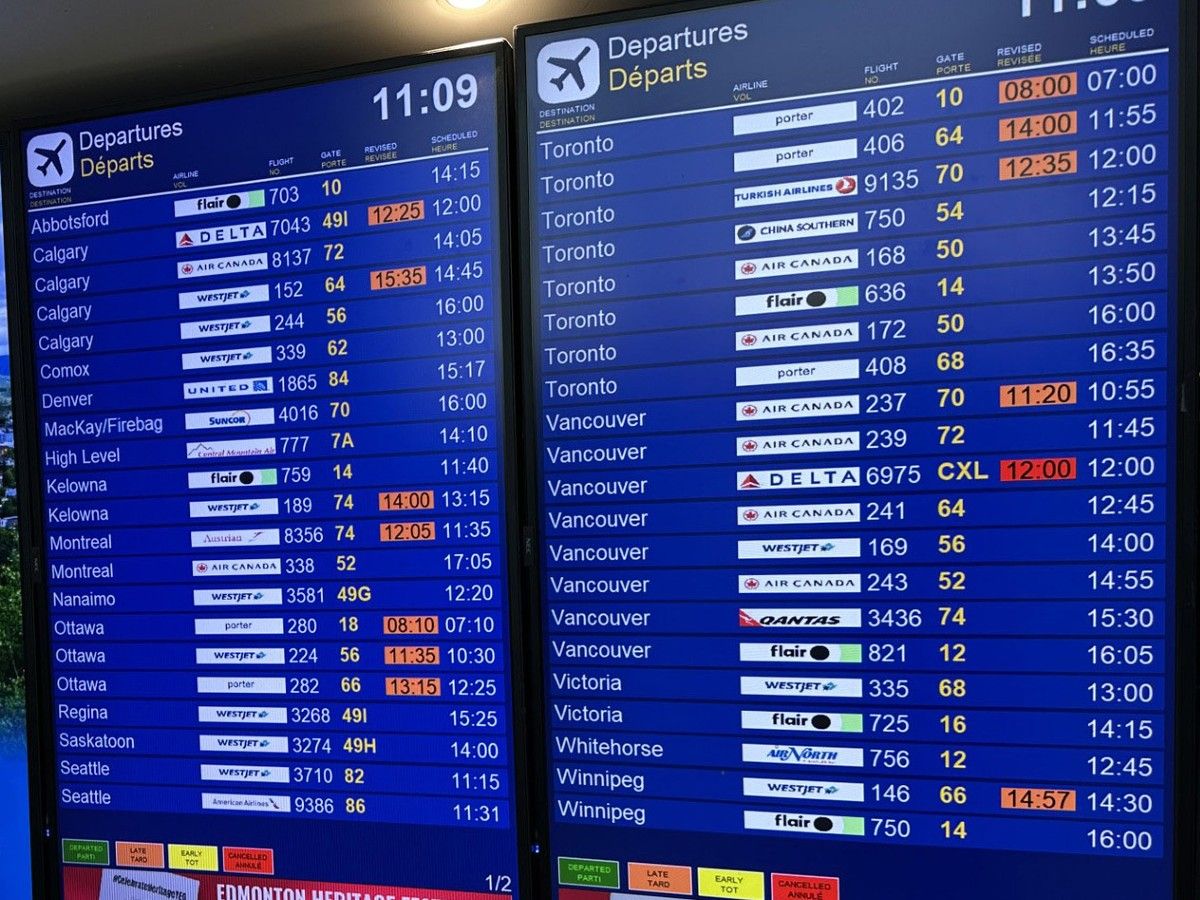
Alberta will not turn its clocks back to standard time on Nov. 1, joining Manitoba and British Columbia in keeping daylight saving time year-round. The change is not expected to affect flight operations, because pilots, instruments and aviation schedules rely on Coordinated Universal Time (UTC), rather than local clocks. Passengers, however, should verify departure times for flights from Alberta airports on Nov. 1 or later, particularly if they booked before June 18, when the province made its decision official.
Saskatchewan already observes permanent standard time. The United Kingdom moves its clocks back to standard time a week before North America does, while about two-thirds of the world does not change clocks at all. Most of the United States observes seasonal clock changes, with Hawaii and Arizona among the exceptions.
Angela Mah, an Air Canada spokesperson, said the airline operates across time zones and through clock changes in countries around the world. “As a global airline, Air Canada operates across all time zones, including daylight savings times, which sees changes year-round in multiple countries globally and within the Air Canada network,” Mah said. “All operations use the globally recognized Coordinated Universal Time (UTC)/ Greenwich Mean Time standard.”
UTC, also known as Greenwich Mean Time and Zulu time, is the global reference against which local time zones are compared. Travel schedules often cite GMT or UTC. In flight planning and operation, pilots use that common clock to coordinate departures, arrivals, weather information and communications with control towers, regardless of the local time where an aircraft is flying.
Abbi Gayle, a program facilitator with the Elevate Aviation Learning Centre, a flight school at Edmonton International Airport, said a shared time standard helps avoid confusion as pilots cross time zones. Canada has six time zones, and local clock practices vary across North America. “Especially in a great big country like Canada, where we have six time zones,” Gayle said. “It just cuts down on miscommunication. So if I’m flying from Edmonton to Toronto, if we’re using the same time, I know I will get there at 18:00 hours. If it’s 18:00 hours UTC, then it doesn’t matter where you are.”
Gayle said some places move their clocks an hour ahead or behind, while others do not change them. “And there are so many places around North America where they put the time an hour before or an hour after, or don’t change at all. So it cuts down on miscommunications that way. Because if we shift an hour behind, then all our times are going to be an hour behind. But 18:00 Zulu is always going to be 18:00 Zulu. It’s just standardized around the world, and it just helps avoid miscommunication and things like that.”
The province’s decision can still affect the local times passengers see on their bookings. Flights run according to UTC, so their times in that global system will not change, but their displayed local departure times may need adjustment when Alberta no longer shifts to standard time. Travellers who bought tickets before June 18 for flights on or after Nov. 1 should check that the local departure time on their reservation remains current, including for Christmas travel.
Edmonton International Airport (YEG) said the move is expected to affect some flight schedules, but not airport operations. “Alberta’s move to permanent daylight time is expected to have some impacts on flight schedules, but we do not anticipate any operational impacts at Edmonton International Airport (YEG),” the airport said in a statement. “Edmonton airports has been working with airline partners to prepare for the change and ensure schedules are updated accordingly. The time change affects how Alberta aligns with jurisdictions that continue to observe seasonal clock changes, particularly during the winter months.”
The airport said some flights have moved by about an hour, mainly on routes to major connection hubs where airlines are trying to preserve convenient onward connections. The schedule changes are being handled through routine airline planning and are not expected to disrupt airport operations. YEG advised passengers to get the latest flight information from their airline, which will contact customers directly about any schedule changes.
The airport said it is not planning a specific passenger awareness campaign about Alberta’s clocks staying the same. The change also prompted questions about whether pilots would need to account for local time differences as they fly. Aviation planning remains on UTC, and Gayle said using one shared clock prevents a local change from producing confusion in flight communications and planning.
Alberta’s move followed a lack of consensus on seasonal clock changes. Related coverage cited the provincial government’s confidence in permanent daylight time despite that lack of consensus, and Bill 31, which formalized the switch. For passengers, the practical step is to review the current itinerary with the airline and make sure the local time for arrival at the airport is correct.
Based on reporting by Edmonton Journal.