
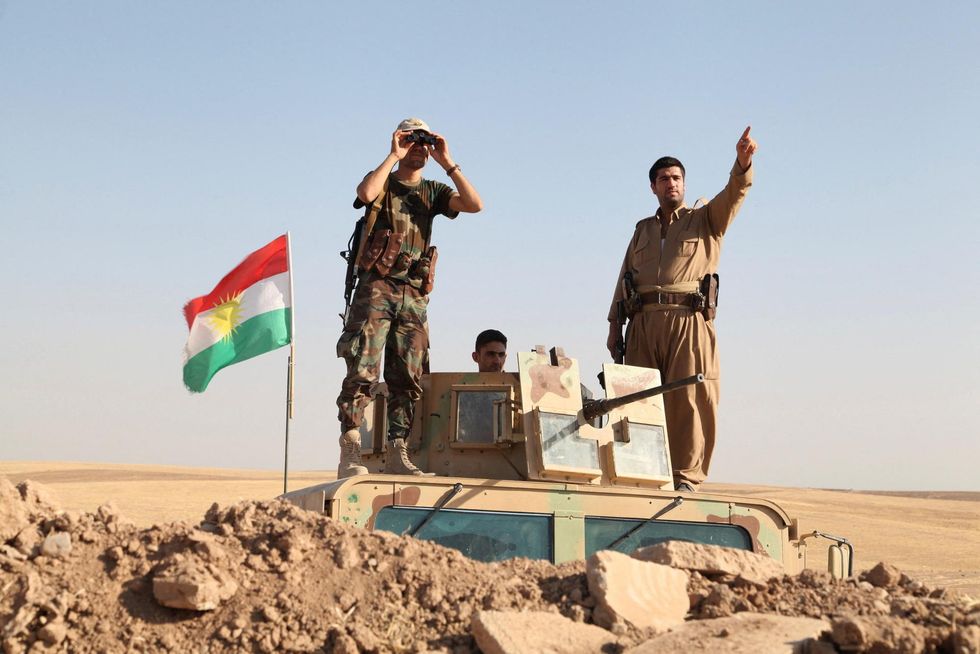
Iraqi Kurdistan announced on Sept. 21 that it had completed the long-delayed unification and reorganization of its Peshmerga forces under the Ministry of Peshmerga Affairs (MoPA), marking a major change in the Kurdish armed forces nine days before the final U.S. military withdrawal from Iraq. Kurdish leaders called the announcement a historic victory, though the structure retains party-linked commands and the ministry has acknowledged that significant work remains before unification is complete.
The Peshmerga have roots in Kurdish guerrillas who fought for much of the 20th century in a more or less united front against successive Iraqi governments. After the 2003 invasion, however, they did not become a single Kurdish national army. Instead, they divided into forces tied to the two dominant political factions in the region: the Patriotic Union of Kurdistan (PUK) and the Kurdistan Democratic Party (KDP).
The timing of the Sept. 21 announcement has focused attention on what security arrangements Washington will leave behind as it reduces its direct military presence. There is no clear indication that the United States planned the announcement as part of its withdrawal strategy. Peshmerga reform has been under way for years, but the developments have prompted questions about how Iraqi and Kurdish institutions will take on more responsibility for security.
The United States has supported Peshmerga reform for years, mainly through the international coalition’s assistance to Kurdish forces fighting ISIS. A 2022 memorandum of understanding between the U.S. Department of Defense and the Kurdistan Regional Government (KRG) set out how the United States could help turn the Peshmerga into a professional military partner.
A unified force could play a role on the front line against Iran-aligned militias and a possible ISIS resurgence. For Kurdish leaders, strengthening a fragmented force may help it withstand pressure. The Kurdish region’s territory also borders Iran, positioning the Peshmerga to contribute to security efforts that serve U.S. interests.
Washington’s end to a military mission does not mean it is giving up its interests in the region, particularly amid a war with Iran. Its stated priorities in Iraq include preventing ISIS from returning and prompting another U.S. intervention, and limiting Iran’s influence, including its spread into Iraqi state institutions and armed groups as the broader U.S.-Iran standoff continues.
The planned shift is for Iraqi and Kurdish institutions to carry more of the security burden themselves. The United States and its European partners are expected to move toward other forms of support, including training, advising, intelligence sharing and helping local forces build capacity. Whether those institutions can prevent ISIS’s return and keep regional rivals and militia groups in check remains a central test of the change.
The practical effect of the Peshmerga reorganization depends on whether it changes who commands the forces. Critics point out that the new Regional Command 1 is led by the KDP and Regional Command 2 by the PUK. Each command can still appoint its own division and brigade commanders, suggesting party loyalty and allegiance continue to shape how the commands operate.
The MoPA has not concealed that significant work remains. The ministry has pointed to progress, including the centralization of salary payments for all Peshmerga forces, regardless of their different commands, through a central ministry account. That arrangement ties soldiers’ salaries directly to the ministry rather than political parties, one of the accomplishments cited in the unification effort.
Kurdish officials say they hope to end party influence throughout the Peshmerga by the end of this year. Masrour Barzani, prime minister of the Kurdistan Region, said unification is only “the first phase of a long path.” Whether the region’s leaders will set aside their rivalries remains unclear.
The political dispute has persisted alongside the military reform. Two years have passed since the region held parliamentary elections, yet a new government has not been formed. The delay stems from deadlock between the KDP and PUK over the division of core ministerial posts and senior government offices in the KRG.
Washington has long made unification a condition for providing aid. The departure of U.S. forces may increase pressure on the two parties to establish a unified front, while Washington will need to put greater emphasis on diplomatic efforts to encourage unification and help resolve the political deadlock. The source account does not say that the United States directed the Sept. 21 announcement, but it describes the timing as difficult to ignore.
A separate challenge concerns Iran-aligned armed groups in Iraq. If they refuse to lay down their weapons or hand them over to the state, disarming them, a key step in strengthening the Iraqi state, will fall to Iraqi authorities. The American side is leaving under a previous agreement with the Iraqi government, which had hoped to disarm the Iranian-backed militias before the U.S. withdrawal.
The groups have resisted calls to give up their weapons, arguing that foreign forces must leave first. They remain too powerful to control easily, while Iran has a strong interest in supporting them, particularly because they can threaten U.S.-aligned forces across the region. The coming weeks and months are expected to bring a contest of wills between the Iraqi government and militias it has long sought to control.
The coalition’s withdrawal marks the beginning of the next test. Iraq appears to be entering a period with fewer foreign troops but continuing foreign security partnerships. The Sept. 21 Peshmerga announcement could support that transition if the force can overcome the divisions that complicate military unification.
The broader question is whether the United States and its European partners can reduce their direct military presence while leaving local institutions strong enough to prevent an ISIS resurgence and restrain regional rivals and militia groups. The United States is leaving Iraq militarily, while the security relationships it spent years building may continue.
Based on reporting by Responsible Statecraft.