
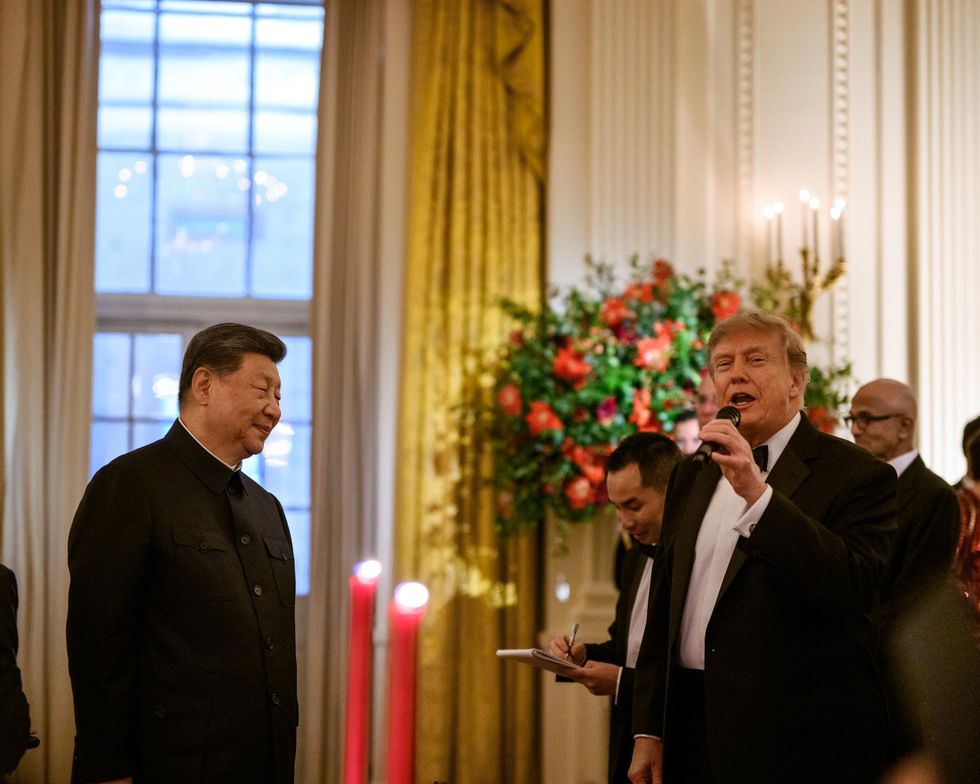
China has signalled it may be willing to join efforts to mediate an end to the Iran war, as the conflict threatens regional stability and the global economy, according to an analysis published by Responsible Statecraft. The article argues that cooperation between Beijing and Washington could help contain the conflict’s effects on oil supplies from the Persian Gulf and Red Sea, while offering a route to a durable settlement.
The analysis says China has generally avoided mediation in other countries’ conflicts, partly to avoid taking responsibility for disputes it did not cause and the diplomatic damage that could follow a failed effort. But the scale of the current crisis may change that calculation. Chinese President Xi Jinping hinted at possible diplomatic involvement during last month’s BRICS summit, and Chinese diplomats privately told the authors that Beijing was ready to step in if the parties requested it.
The article presents the risk of further escalation as acute. At best, it says, negotiations could remain trapped by personal and political imperatives that repeat failed approaches. At worst, the crisis could lead to the use of tactical nuclear weapons. It argues that the United States and China share an interest in resolving the conflict before it becomes a more serious source of tension between them.
U.S. President Donald Trump initially expected the war to last no more than 100 hours, the analysis says. The killing of Iranian Supreme Leader Ayatollah Ali Khamenei was intended either to bring down Iran’s theocracy or force its surrender. Trump expected a suitable successor, probably from within the same theocratic system, to be appointed in line with a blueprint from Venezuela. The article says no alternative plan was prepared.
More than seven months later, it says, Trump believes he has exhausted every option except all-out war. By the fourth day of the U.S. campaign, as it became apparent that he had lost control of events, Trump began threatening unprecedented force against Iran. Those threats included strikes on Iranian energy infrastructure, an invasion of Iranian islands in the Persian Gulf or seizure of other Iranian territory, and wiping out Iranian civilization.
Trump did not carry out any of those threats, the analysis says, apparently recognizing the regional disaster that would follow if Iran retaliated. Pressure from regional governments, potential U.S. casualties, the risk to the global economy and political consequences at home helped restrain him. The article warns, however, that his calculations may change after November 3, when the midterm election no longer constrains him.
With little confidence that diplomacy, sanctions or limited warfare can provide an exit or a victory, Trump could pursue a rapid and large-scale escalation, the analysis argues. It says he may see that as the only way to topple Iran’s theocracy and limit Tehran’s ability to impose prolonged costs on the global economy, turning what the article calls a major failure into a political win.
Such escalation could intensify the problems Trump faces, the authors write, because Tehran would respond with a major counter-escalation. They point to recent Houthi advances in Yemen as evidence that Iran and its network retain significant options. In addition to attacks on energy infrastructure, the Iraqi Popular Mobilization Forces militia could overrun Kuwait or help spur a popular uprising in Bahrain, potentially reshaping the region’s political geography.
The article says a major escalation could also push China to intervene. Beijing’s decision to sharply reduce its oil demand has been a key reason world petroleum prices have not climbed to $150 a barrel, it says. That approach could limit price increases while the war disrupts shipping through the Strait of Hormuz, but it would be less effective if energy production facilities were directly attacked or monarchical governments were toppled. In that event, China might remain the world’s swing consumer yet still be unable to stop oil prices from exceeding $150 a barrel or prevent a deeper global economic crisis.
Oman, Qatar and Pakistan have shown ingenuity, creativity and persistence as mediators, the analysis says, but it argues they do not have the leverage over both Iran and the United States that China possesses. It points to Beijing’s role in the 2023 normalization agreement between Iran and Saudi Arabia as evidence of that influence.
Iraq and Oman had carried out much of the groundwork for that mediation in previous years, but distrust between Tehran and Riyadh remained too deep. When Xi visited Riyadh in December 2022, Saudi Crown Prince Mohammed Bin Salman asked China to help overcome obstacles to restoring relations between Iran’s theocratic government and the Saudi Kingdom. China became a co-signer and guarantor of the resulting agreement, rather than serving only as a mediator.
The article says Bin Salman understood that an agreement needed the involvement of a power with enough influence over both sides to keep them to their commitments. China’s importance to Iran and Saudi Arabia made a rupture with Beijing too costly, and its role as guarantor helped secure the deal and sustain it. The agreement has remained in place despite tensions and upheaval over the past three years, the analysis says.
The authors caution that relations between Washington and Beijing are more complex and sensitive than China’s ties with Tehran and Riyadh. Neither Iran nor Saudi Arabia regards China as a rival or peer competitor, while the United States does. Still, the article argues, Beijing has enough influence with both Washington and Tehran to press for a lasting settlement and create a limited opportunity for diplomacy.
China’s first task would be to open a diplomatic channel, the analysis says. Trump has signalled that he is not interested in diplomacy now. The administration believes that the blockade on Iran, together with the restoration of much of the oil flow through the Strait of Hormuz, will eventually improve Washington’s position. Trump has told regional interlocutors that he will not lift the blockade even if Tehran agrees to reopen the Strait completely, because he wants to use the blockade to win concessions on the nuclear issue.
The article identifies two central flaws in that strategy: it overlooks the harm the status quo is causing to U.S. allies in the region and the global economy, and it assumes Trump can ensure stability in the Persian Gulf and oil markets. Ansar Allah’s closure of the Bab el-Mandeb to Saudi ships and strikes against Saudi Arabia’s East-West pipeline have tested that assumption. So has the cost of U.S. operations to escort ships, which the analysis says does not appear sustainable.
The authors argue that Washington is mistaking a tactical advantage in the Strait for a decisive strategic shift. They say the administration has hardened its position despite the underlying situation, further reducing the chances of a diplomatic agreement. When Trump met Xi in Washington on September 24, he wanted to discuss China’s cooperation with U.S. extraterritorial sanctions on Iran rather than diplomacy, the article says.
As a counterproposal, China could put forward a draft compromise addressing the key concerns of all parties. It could assure Trump that negotiations would proceed quickly and give Iran assurances about U.S. compliance with and implementation of any deal. The proposal, the authors say, should build on the Islamabad Memorandum of Understanding of July 2026 and the 2015 Joint Comprehensive Plan of Action, or JCPOA.
The proposed agreement would establish a permanent ceasefire across the region, including Lebanon and Yemen, to put the region on a path to de-escalation. It would permanently reopen the Strait of Hormuz and introduce environmental service fees shared among all Persian Gulf littoral states, helping fund restoration of the waters as well as reconstruction and humanitarian needs created by the war. It would also lift the American blockade on Iran and establish working groups to negotiate a final agreement on Iran’s nuclear activities within six months. China would guarantee all four elements.
The nuclear agreement, the analysis says, should permit a civil programme under enhanced International Atomic Energy Agency inspections. It states that limiting uranium enrichment to 3.67 per cent of U235 is vital, and calls for full IAEA access to every Iranian nuclear site, as well as undeclared locations if credible evidence indicates they are being used for nuclear purposes. The source text ends mid-sentence after saying that this would not be easy or sim
Based on reporting by Responsible Statecraft.