
Responsible Statecraft has reported:
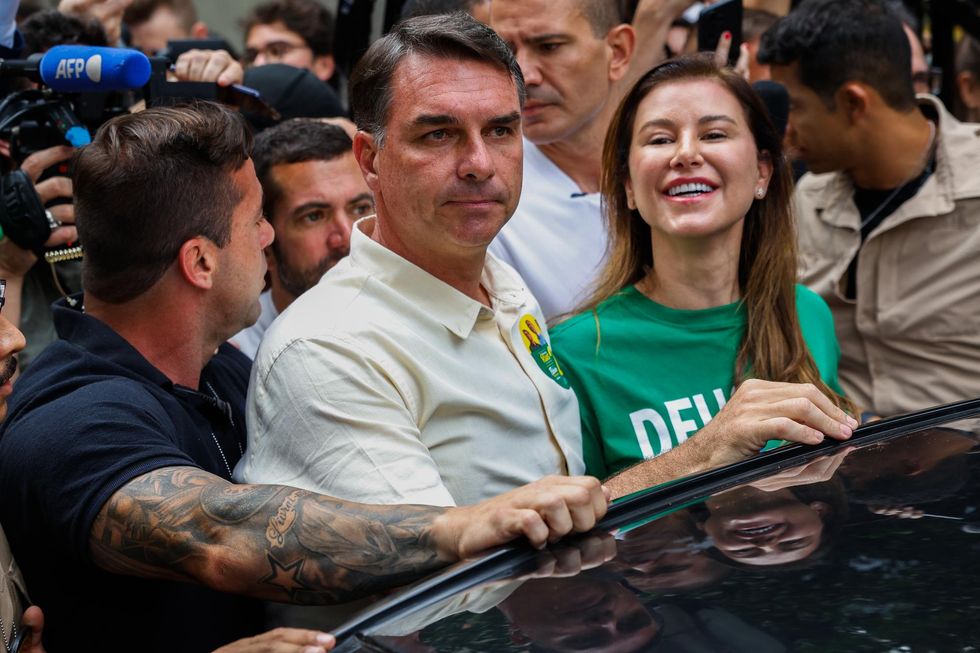
Flávio Bolsonaro, the right-wing challenger in Brazil’s presidential election, travelled to Miami after incumbent Luiz Inácio Lula da Silva won re-election, then briefly declared himself Brazil’s “president-elect.” President Donald Trump declined to recognize Bolsonaro’s claim, saying, “I won’t get involved.” The episode leaves the future of the Bolsonaro movement in question as Lula prepares for a fourth term amid political, institutional and economic challenges.
Bolsonaro, son of former president Jair Bolsonaro, who held office from 2019 to 2023, left Brazil after the election. Within hours of his loss, Supreme Court Justice Alexandre De Moraes ordered him to surrender his passport. Reports cited in the source say Bolsonaro and his family then travelled overland to Argentina, boarded a jet to Ecuador, described as aligned with Trump, and continued to Miami. The article characterizes his escape as daring and suggests it may have received CIA assistance, without presenting evidence for that claim.
After the family arrived in Florida, Secretary of State Marco Rubio granted them asylum, describing them as victims of political persecution. Bolsonaro published a letter on Tuesday alleging election fraud and announcing himself as “president-elect of Brazil.” He compared his position with those of Venezuelan opposition figures Juan Guaidó and Maria Corina Machado.
The first version of the letter contained errors reportedly generated by artificial intelligence. Among them was an outdated coat of arms with the pre-1967 inscription “United States of Brazil.” Bolsonaro republished an amended version within an hour. The revised text, described as approved by the State Department, referred to him as “leader of Brazil” instead of president-elect.
Trump’s response came when he was asked whether he recognized Bolsonaro’s self-proclaimed victory. His refusal to get involved, the article argues, reflects a broader retreat from backing a MAGA-friendly opposition in favour of Lula, who is nominally left-wing. It draws a comparison with Venezuelan Vice-President Delcy Rodríguez and asks why the U.S. president has again declined to support an opposition aligned with his political movement.
The article traces the shift in U.S. policy to a trade dispute that began last August, when the Trump administration imposed 50 per cent tariffs on a range of Brazilian products. Washington said Brazil had violated the human rights of Jair Bolsonaro, who had been barred from seeking office and sentenced to prison by Brazil’s Supreme Court over an attempted coup after his 2022 election loss to Lula.
The tariffs arrived as Lula was dealing with record-low approval ratings. The article says the trade conflict helped him recover politically by allowing his government to rally Brazilians against the Bolsonaros and their foreign allies. It also caught the Bolsonaro family off guard: before the broad tariffs, they had sent Jair’s youngest son, Eduardo, to Washington to lobby for sanctions against the Brazilian government rather than tariffs affecting a wide range of products.
Brazil responded by standing its ground, and trade with China increased sharply. The article calls that outcome an own goal for Washington. Three months after the tariffs were imposed, Trump unilaterally removed most of them. Lula attributed the change to “good chemistry” between the leaders after a brief meeting at the United Nations.
The source suggests Brazil’s mineral resources may help explain the policy change. In 2025, the Trump administration’s trade war with China was followed by Beijing restricting U.S. imports of Chinese rare earths. Brazil has the world’s second-largest reserves of the minerals, making it a possible partner in reducing U.S. reliance on China, referred to in the source as the Middle Kingdom.
The article says Lula and his Workers’ Party, despite their rhetoric about protecting Brazilian sovereignty, have largely yielded to Washington over rare earths. In April, U.S. mining multinational USA Rare Earth announced it would buy the Goiás-based Serra Verde Group for $2.8 billion. Serra Verde owns Brazil’s only active rare earths mine.
Lula could have annulled the purchase but chose not to, according to the article. He also reversed plans to establish Terrabras, a state-owned rare earths company. The source says both decisions were intended to placate Washington and Brazil’s business elite. Brazil has transferred all of its currently limited rare earth production to an American company, although a recently passed law requires domestic processing and refining of the relevant minerals.
Lula will face a difficult Congress during his fourth term. Jair Bolsonaro’s Liberal Party, or PL, won more seats than any single party had secured in Brazil’s National Congress since the 1980s, taking a record 121 seats among the deputies and 28 in the Senate. The article also says Bolsonaro allies will control 124 of the 513 seats in the lower house and 32 of the 81 seats in the Senate.
If a political crisis develops, clientelist centrist parties that together control about a third of the legislature, known as the Centrão, could align with the opposition and seek to remove Lula. The source compares that possibility with the impeachment of former Workers’ Party president Dilma Rousseff, who served from 2011 to 2016. Lula is described as an octogenarian, and the article says avoiding impeachment through the end of his historic fourth term will be a central challenge. It adds that he has already pledged further market-friendly policies to appease angry investors.
The Supreme Court also faces a legitimacy crisis, according to the article. Justice De Moraes has faced significant backlash over allegations that he exceeded his authority in pursuing political opponents, particularly figures associated with Bolsonarismo. His demand that Flávio Bolsonaro surrender his passport so soon after the election frustrated people in Lula’s camp. Although Bolsonaro is credibly accused of serious crimes, the president’s team fears the timing gave him “a powerful justification for portraying himself as the victim of a witch hunt,” sources told Bloomberg.
Both Lula and Bolsonaro campaigned on reforming the Supreme Court; Bolsonaro promised to impeach De Moraes. The article argues Lula should pursue reform through a broad agreement with the opposition. De Moraes is due to take over the court’s presidency in September 2027, and the source says a serious reform effort could help protect Brazil’s institutional stability in the coming term.
Four members of the Bolsonaro family are expected to join the next Congress: Jair Bolsonaro’s wife, Michelle; his brother, Renato; and his sons, Carlos and Jair Renan. Flávio’s exile has widened divisions on the Brazilian right and is expected to continue shaping debate over the movement’s future. PL leader Valdemar Costa Neto, evangelical pastor Silas Malafaia and São Paulo Governor Tarcísio de Freitas have recognized Lula’s victory and distanced themselves from Flávio, whom the article describes as a fugitive. Conservative voters, however, are expected to keep looking to Jair and Michelle Bolsonaro for leadership.
The article presents Lula’s victory as a likely end to the current wave of Trump-aligned right-wing governments in the Americas. It says most leaders in the so-called Shield of the Americas are deeply unpopular and may face backlash in future elections, with some exceptions. It concludes that the White House appears to have calculated that U.S. interests in Brazil are reasonably secure under Lula, while Flávio Bolsonaro has time in Miami to follow the path taken by Juan Guaidó.